
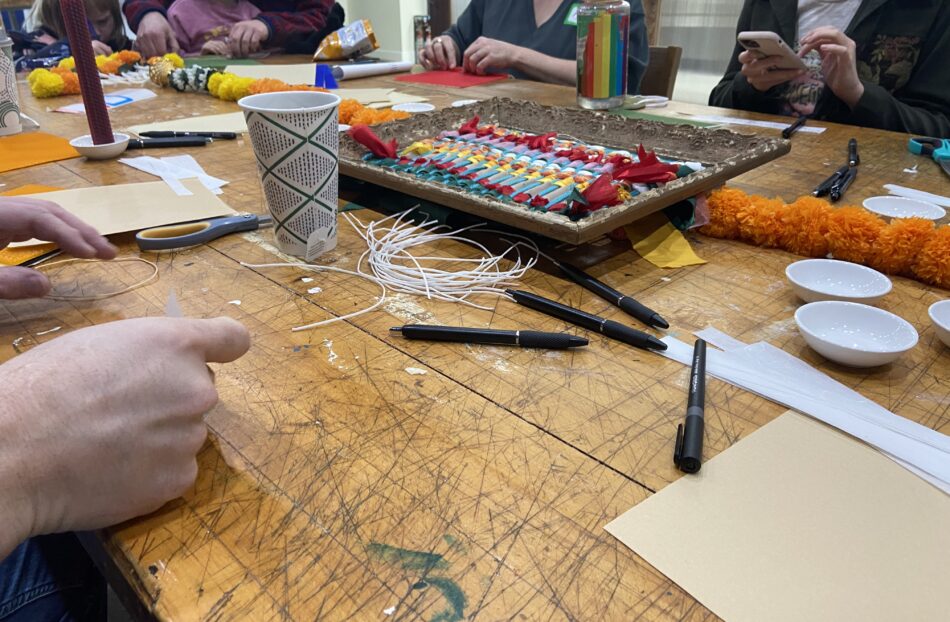

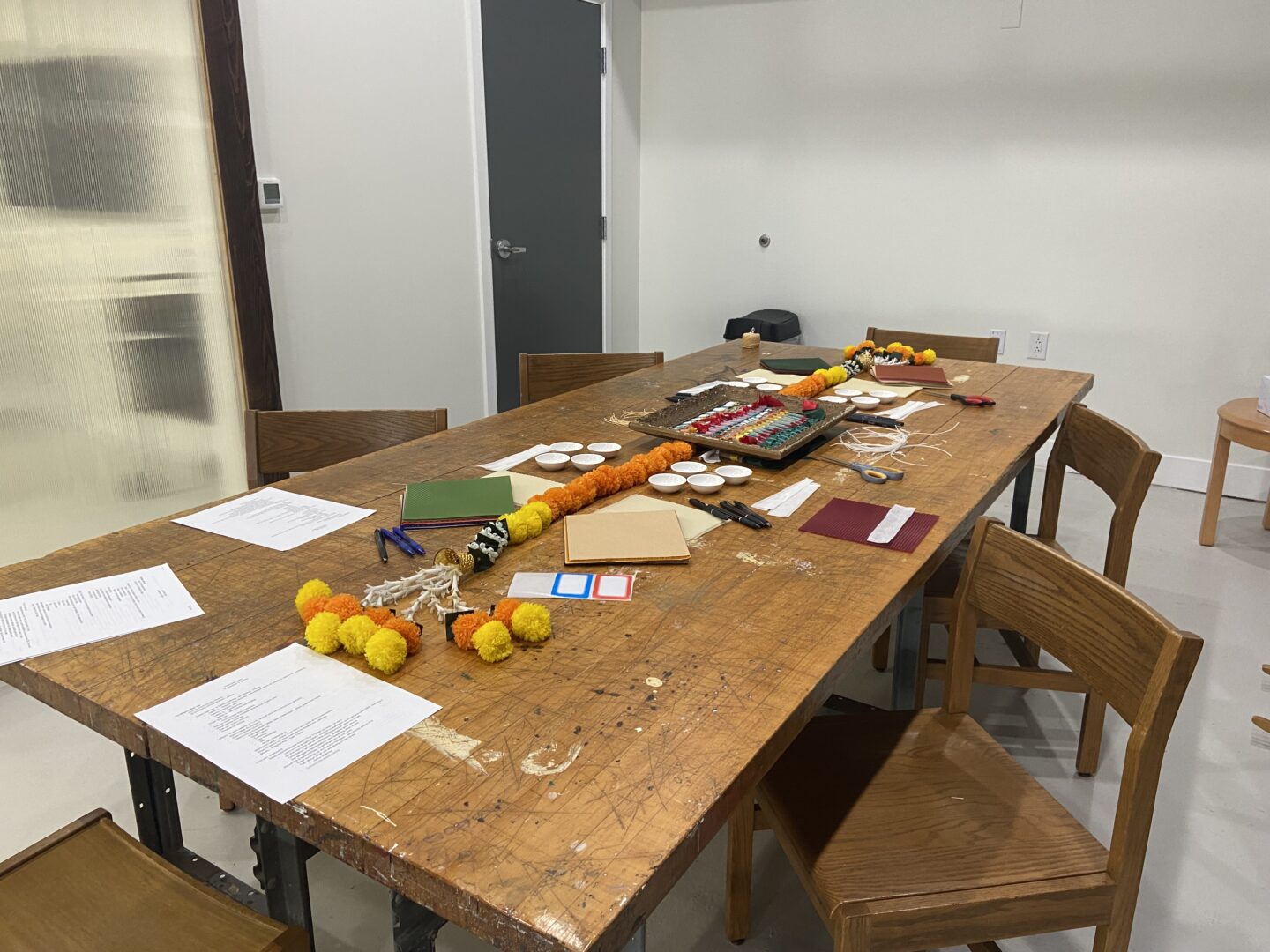
On a chilly December Saturday, tables adorned with flower garlands line up and down one of the activity rooms in the Forman Arts Initiative, a community arts resources organization in North Philadelphia.
As guests walk in, they are welcomed by staff and asked to sit at a table where there are materials for candle-making and coloring. The space is warm and invites creativity, but the people attending this event are here for something less cheerful: they are here to grieve.
The event is called “The Light We Hold,” a gathering for people to share the grief they are holding this holiday season.
It’s hosted by The Thread, a community-based organization whose work supports people grieving through artistic installations and group practices.
“We formed to give space for grief,” said Beth Jellinek, a therapist and one of the co-founders of The Thread. “There’s so much grief in this city, so much collective grief.”
As participants entered the space, they sat down at a long table at the side of the room and began making candles and meeting one another. The seven participants came from all different parts of the city. Some already knew each other, while some were meeting for the first time.
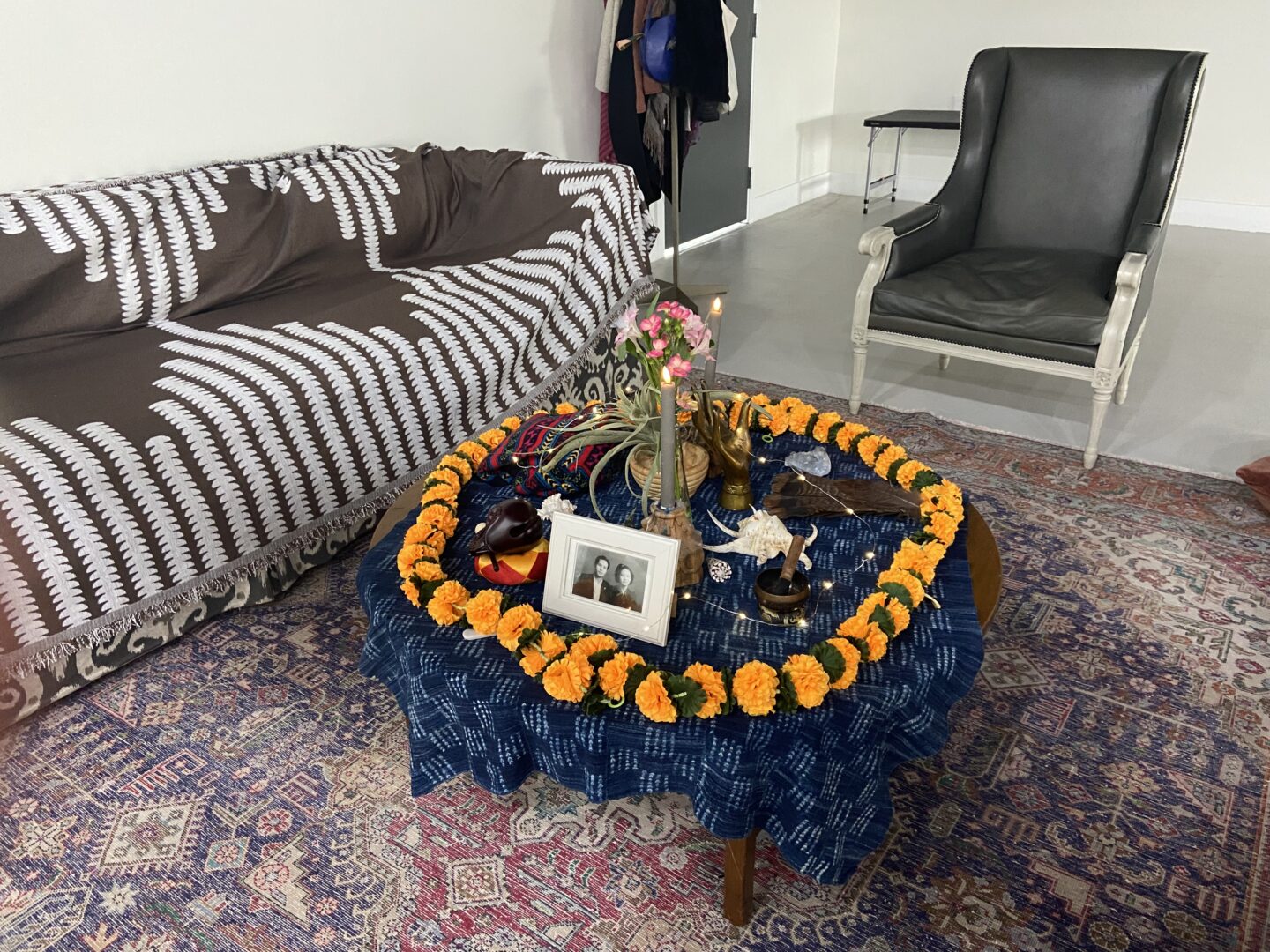
Once they were finished with their candles, the guests were ushered to sit in a lounge area at the back of the room. At the center was a circular table that served as an altar where attendees could place objects they brought that remind them of what and who they were there to grieve. After brief introductions, Jellinek, who is also a holistic mental health therapist outside of The Thread, led the group in a somatic breathing exercise to bring a sense of grounding and comfort to the space before guests started sharing.
There were memories shared of deceased loved ones, including parents, family, and friends that people were especially missing around the holidays. People spoke tearfully, reminiscing memories of those they have lost, even occasionally laughing with the group upon recalling their most cherished moments.
Some participants shared their sadness over the state of the world right now and the various tragic events occurring that they feel powerless against. Others mourned what could have been, thinking about their childhoods or various life choices that they wish had gone differently.
“For me, I am processing a lot of childhood grief through therapy and community-based activities,” said tech executive Alex Donaldson, one of the participants. “There are so many different layers and kinds of grief, and to be in a space like this where there’s something to share, be heard, and be witnessed, brings a lot of healing.”
The Beginnings of The Thread
The organization began in 2022 with an art installation that featured a disconnected rotary phone booth that served as a space for people who are grieving to have a one-way conversation with a deceased loved one.
Currently stationed in Vernon Park, passersby can pick up the phone and talk to someone who is no longer with them. They also typically have a portable version of the booth at other events and collaborations.
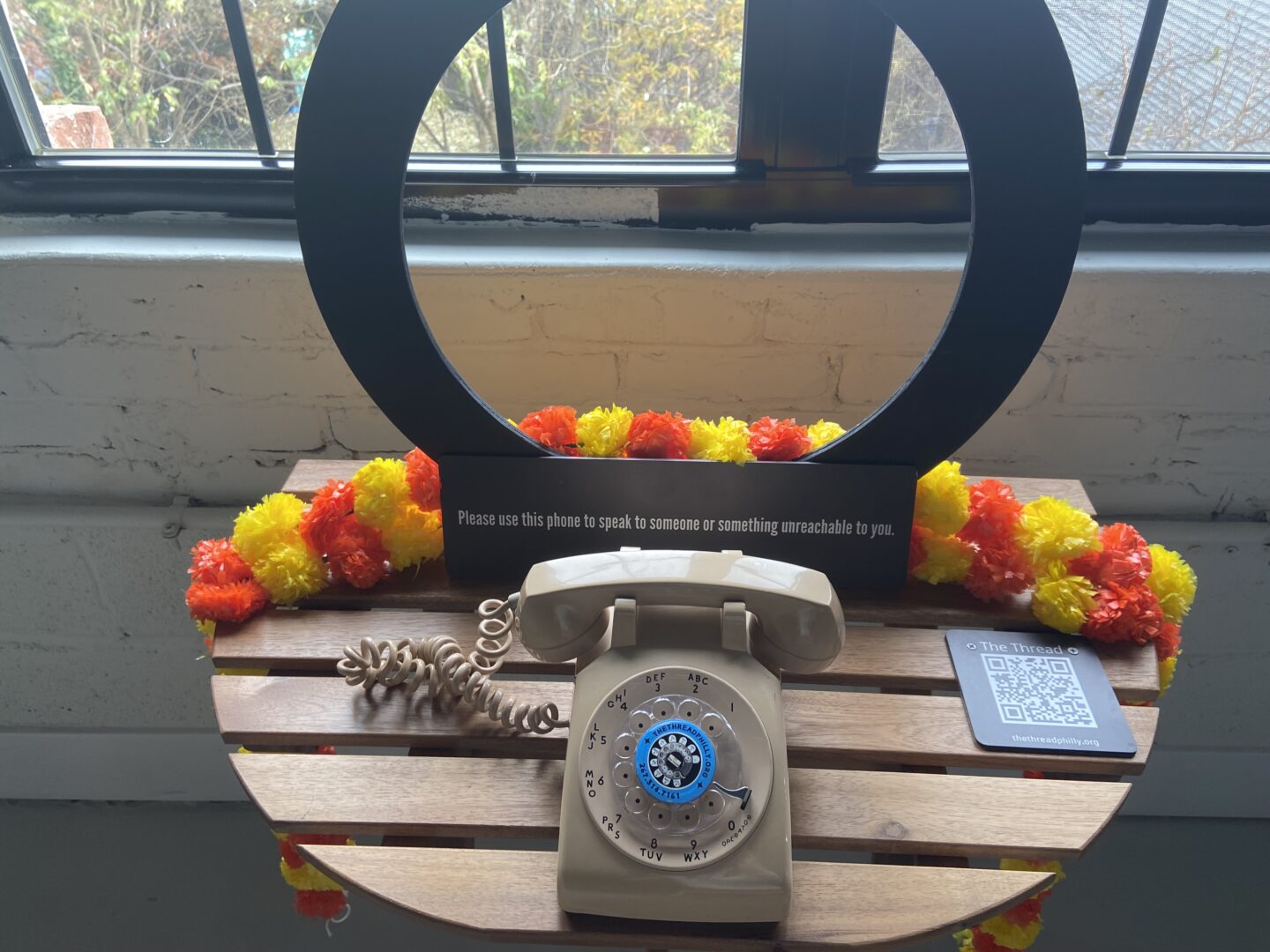
The Thread co-founders Beth Jellinek, Annie Chiu, and Ravina Daphtary were inspired to create the phone booth installation from noticing a lack of public grieving spaces and a general negative stigma surrounding death and grief in our society.
“The grief is here, and the communal aspect allows us to be with it together,” Jellinek said. “Today, no one had the same share in any way, and yet, I think people were feeling held and seen, and it leaves us all together in the universality of our grief and being honored with our own stories in this way that transmutes the energy to something healing instead of how it can feel huge when it’s internal.”
The Thread puts a twist on typical grief-gathering events with their inclusion of more artistic and creative practices for guests to engage in. At The Light We Hold, participants were able to color and make candles with notes inside addressed to their deceased loved ones. They also occasionally offer these sorts of activities at their phone booth installation, with the booth itself being colorfully decorated.
“The art making itself already draws you in to engage,” Chiu said. “You’re not just a passive observer or listener anymore. The fact that you’re collectively making something together with no judgment with whatever color, shape, or form you want to take it brings you into engagement versus checking out or stepping back. Art evokes all of us to be active participants in our lives.”
The Politics of Grief
For the co-founders of the Thread, grief is inherently political.
“Whether we’re talking about gun violence, the opioid crisis, chronic illness, pandemics, lack of healthcare infrastructure, safety, racial injustice, economic injustice, the death statistics we look at tell a story of what people are experiencing in their actual lives,” The Thread co-founder Ravina Daphtary said. “How a person dies is some kind of reflection of how they lived, and being able to witness and experience that together is part of how we are able to demand solutions.”
Shy Wolf, an artist who participated in The Light We Hold says they have been holding grief for the environment and communities that are suffering in the current political moment.
“It’s definitely a grieving time of year, kind of a grieving time of life,” said Wolf. “Lots of collective grief I’ve been holding. Between the climate, wildfires, genocides, and people losing their rights every day, a lot of that grief is so much bigger than any of us, so I keep reminding myself, don’t try to hold it alone, go be in community.”
The founders say that this is one of the driving forces of holding events like this one: so that people grieve together, rather than in isolation.
“I see grieving as an act of resistance,” co-founder Annie Chiu said. “Instead of pretending like all is okay, this world is okay, it’s an emotion that I feel is rebellious in many ways, saying no, this is hurtful, this is sad, this is damaging, this is loss. It’s speaking truth to what we’re collectively going through and saying it’s okay to not feel okay with any of that.”
The founders say that the work of grieving has a particular significance in Philadelphia, where according to the Childhood Bereavement Estimation Model, a quarter of Black youth in Philadelphia will lose a parent or sibling by the age of 25. Deaths due to gun violence and drug overdose continue to plague the city, particularly neighborhoods in North Philadelphia like Strawberry Mansion, Hartranft, and Kensington, which is where The Light We Hold took place.
“Even when we think about local news, the way deaths are often reported is what is the statistic, and it is so dehumanizing,” co-founder Beth Jellinek said. “Believing that every life is a universe that we can honor and celebrate is a deep meaning for us and is so needed.”
Holding On to the Light
After a collection of deep breaths to end each person’s testimony, the group began to disperse, talking amongst each other and returning to the candle-making and coloring activities.
The Thread co-founder Ravina Daphtary chatted with a couple of the participants about some of their favorite recipes from their loved ones who have passed. A participant shared how she has compiled her deceased aunt’s recipes into a homemade cookbook for her and her family to use.
Conversations and laughs filled the air as the founders and other participants spoke casually about the people they are grieving.
“I want people to feel just as able to express their feelings around grief as they are with anything else, and some of that is just that emotion is shamed period,” said Daphtary. “There’s this specific type of phobia around talking about death and grief, and that feels really messed up when a lot of people are dying.”
Expanding on the phone booth installation, The Thread is starting a voicemail that people can call to leave a message for loved ones they have lost and for the organization to build a grief story archive. The number is: (267) 314-7161
Going forward, the co-founders of The Thread look to bring a sense of security to Philadelphians surrounding their grief. Through events like The Light We Hold and the simple act of phoning a desceased loved one, they are treating discussions of grief and death as less of a taboo topic.
“I would love for grief to be synonymous with love,” co-founder Annie Chiu said. “That is the response to a loss of love. There’s no personal shame attached to it, it’s so universal in so many ways. It’s an expression of love at the end of day, and with that attitude towards it, we would be more open to share it and talk about it in everyday discourse with one another.”
Be the first to comment