
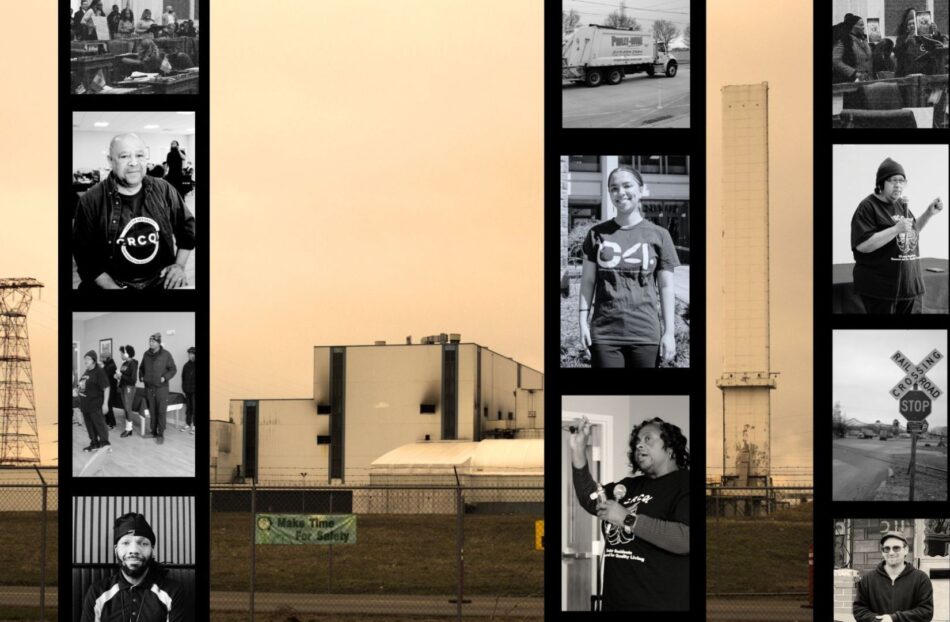

Chester PA is a small city on the Delaware river, 15 miles southwest of Philadelphia. Once a manufacturing hub during World War I that drew a diverse workforce, Chester is now a city of about 34,000 residents, 72% of whom are African American.
“Chester is a very tight-knit community,” says Dr. Kristin Motley, the city’s Health Commissioner. “Everybody knows each other and if you don’t know a person, you know their dad or their mom or their child or a cousin. We look out for each other. The people here are great and they want to be great. I just don’t feel like in the last few decades, Chester has seen its potential.”
Chester is also the location of the largest trash incinerator in the United States.
The incinerator, which is currently operated by the private industrial waste management company Reworld, has been a source of protest since it began operations in 1991. Currently, it burns up to 3,500 tons of trash a day, and generates electricity from the steam produced.
In Chester, emissions from burning trash have been linked to disproportionately high levels of disease, including a pediatric asthma rate four times the national average and among the highest infant mortality rates in Pennsylvania. 30 percent of the trash burned in Chester comes from Philadelphia.
But soon, this arrangement could change.
Philadelphia’s contract with Reworld expires on June 30, when the city will need to decide whether to renew the Reworld contract, or instead send it’s garbage to landfills.
Ahead of this decision, City Councilmember Jamie Gauthier introduced the Stop Trashing Our Air Act, which, if passed, would ban the city of Philadelphia from contracting with companies to incinerate its trash.
Chester, and the people who call it home, now find themselves at the center of a national debate on how the United States should dispose of its increasing amounts of waste. Living next to heavy industries has been linked to the disproportionate levels of illness experienced by Chester’s residents.
“The situation in Chester is probably the worst case of environmental racism I’ve ever seen.” said Mike Ewall, an environmental justice activist and policy writer, who wrote the Stop Trashing Our Air Act.
Reworld and Reworld staff members did not respond to requests for comment.
What happens next in Chester could determine not only where Philadelphia’s trash goes, but also shape the national debate over trash incineration. Philadelphia Neighborhoods spoke with the Chester residents at the center of this debate about decades of life across the street from the nation’s largest incinerator.
These are their stories.
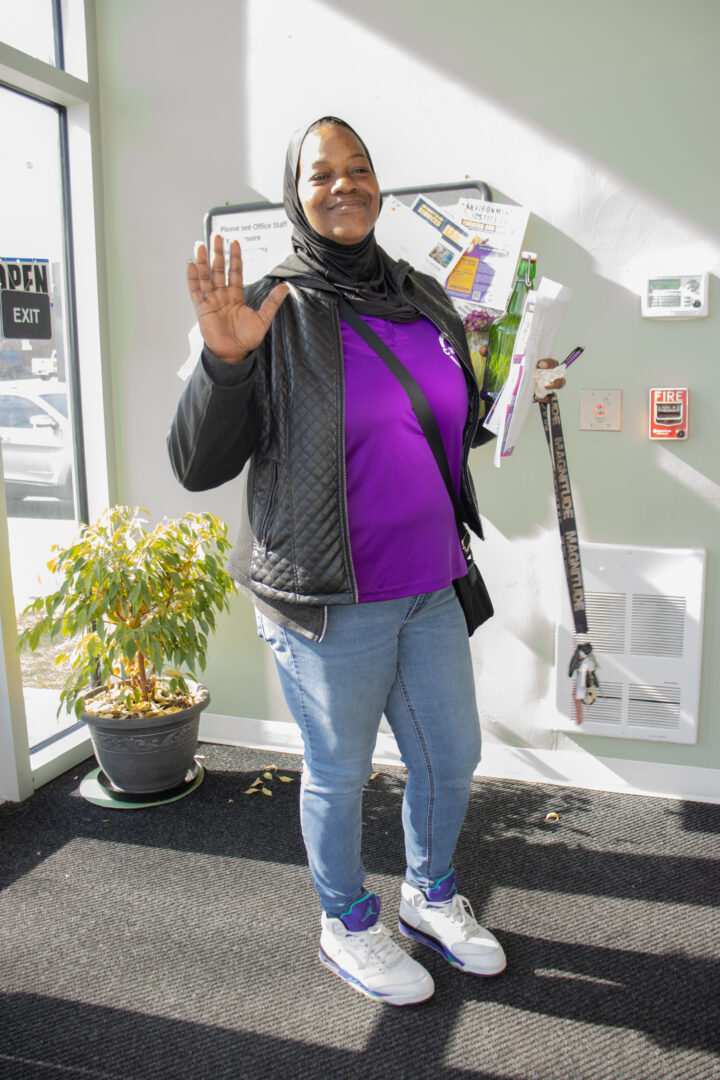
Sylvia Richbow
“All of my neighbors have lost family members to cancer over the years.”
Sylvia Richbow grew up in Chester. She is a member of Chester Residents Concerned for Quality Living or CRCQL, an environmental justice group active in Chester since 1992.
“When I was a kid, we would try to play outside in the summer and we couldn’t, because the tractor trailers. I grew up on 2nd Street on [PA] 291 where the incinerator is. There, the tractor trailers would be lined up back to back across the street.
Some days I couldn’t cross the street because there were so many tractor trailers piled with trash, all up and down. There were only two lanes back then, and now it has four lanes.
[The trucks] would drip trash juice, trash would fly off their trucks. And that’s all before they start burning it.
My grandparents lived on 2nd street for over 60 years. My mom has six kids. My youngest brother died at 34 from A.L.L. (acute lymphocytic leukemia). My mom died from pancreatic cancer. My grandpa died from asbestos cancer. My grandmother died from mesothelioma, the blood cancer. And we all grew up on 2nd street. And that’s only one family, two doors apart from each other.
All of my neighbors have lost family members to cancer over the years. A lot of them have lost their moms, their dads, their grandparents, all to cancer, and we all are in the same area.
If the bill passes or if the bill doesn’t pass, at this point, I think we need to figure out better ways to get rid of the trash. Because I can agree and disagree with both sides. We don’t want the trash here, but the trash does have to go somewhere. So why don’t we create more positive ways to get rid of the trash? We need evolution around getting rid of trash.
I would tell Philadelphia that you claim that you’re a city based on brotherly love. Well, we’re your brothers and sisters. We’re your next door neighbors. We are only a stone’s throw away. We travel to Philly. You traveled to Chester. You can’t go to Delaware without coming through Chester. All roads run through Chester!”
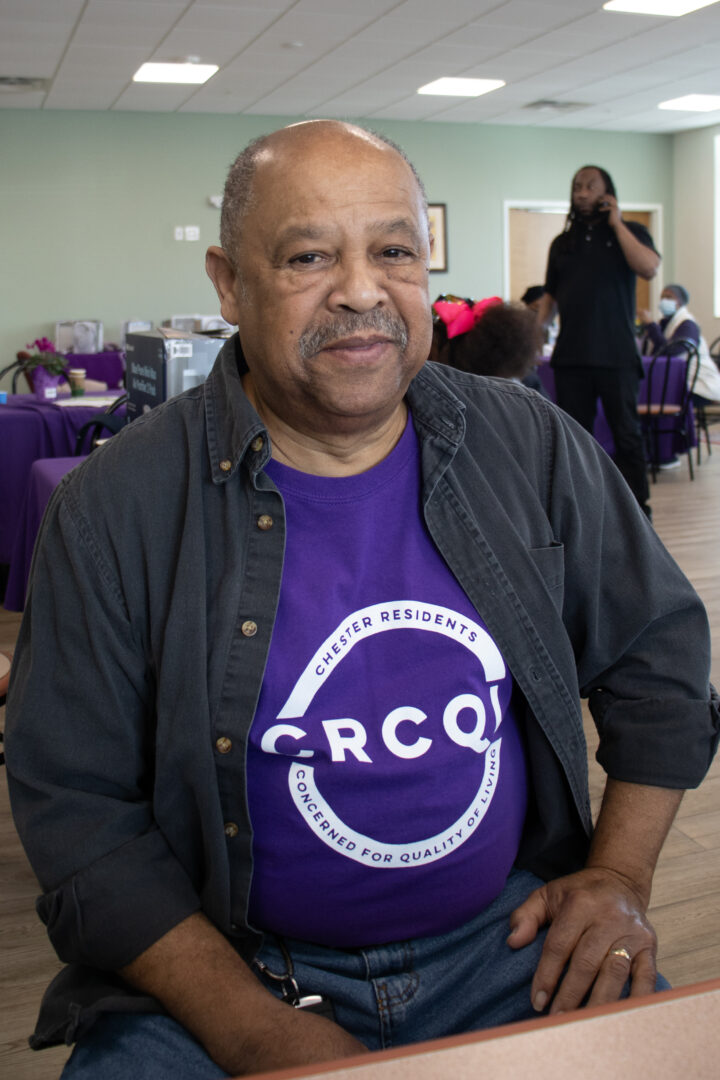
Harry Crawford
“If you could come down to experience it, then I think you would think about it differently.”
Harry Crawford has lived in Chester since he was born, and is a member of CRCQL.
When the incinerator was installed, I read some things about it. The information that we received back then was that it was a trash-to-steam plant.
At first, there was not a large volume of trash coming here, so it wasn’t anything that was all that concerning. But after I retired and actually started seeing what had been going on, it was very concerning.
When you ride through that area, you know you are there riding through that area. It has a certain smell about it. When I get out of the car, I feel it in my eyes and in my chest. I try not to stay there for a long time.
The homes of the people who live near the incinerator just seem to deteriorate. There is so much vibration from all the trucks going by. The people who are living in that area don’t have a feel for it anymore, because they come at all hours.
I talked to one lady who said since she moved there, her side wall is actually separating, just from the vibration.
[Industrial Highway, PA-] 291, or 2nd Street, was never that wide. That was only a two lane road. They decided to make it better for the truck to come down, and that’s when it went to a four lane road, because of the volume of trucks.
I was riding down 291, I think it was in November, and there were 29 trucks waiting to go into Covanta. Just sitting here with smut coming out. You can’t open your windows because of the noise of the trucks, because of the smell of the trucks… It’s that bad.
So just limiting the number of trucks from coming here will help by itself. Those people who are living there will have more peace of mind
I think that allowing it to be built was one of the worst procedures that the Chester government made, just to get tax money.
If you don’t think it actually matters, I’d build a hotel for you right in that area. If you could come down to experience it, then I think you would think about it differently.
If you had to live with not being able to open your window, not being able to get a good night sleep, let alone the whole environment issue, you would think differently about it.
Keep in mind they didn’t build it in Philadelphia in your neighborhood. They built it in our neighborhood.
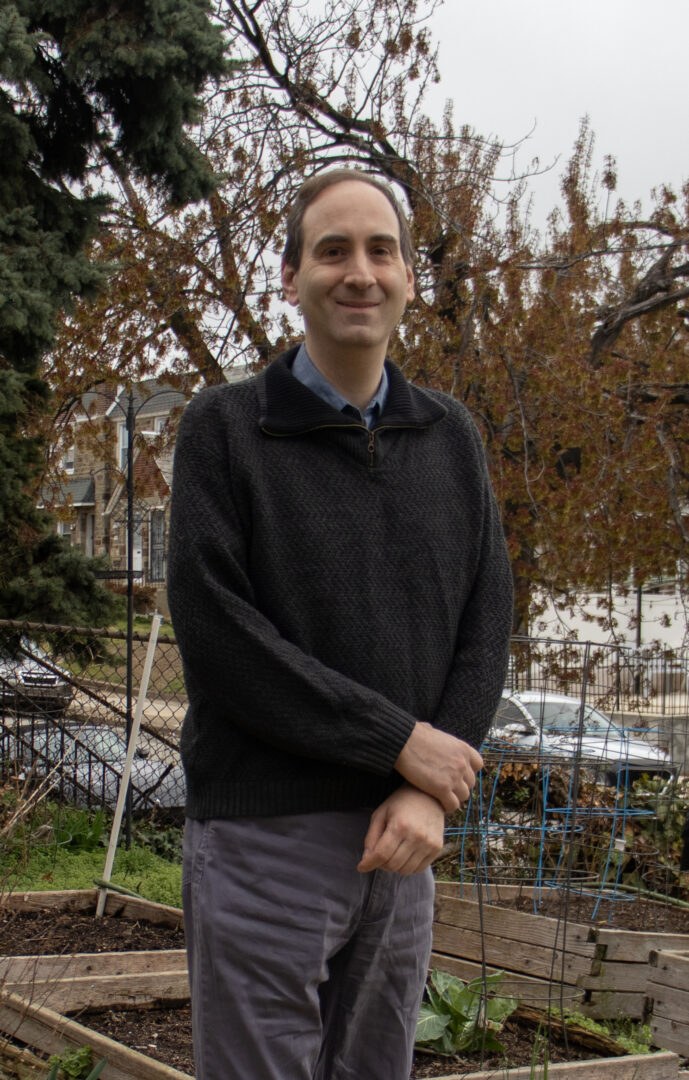
Mike Ewall
“The situation in Chester is probably the worst case of environmental racism I’ve ever seen”
Mike Ewall is the founder and director of Energy Justice Network, and has been an activist supporting environmental justice since high school. He wrote the “Stop Trashing Our Air Act” in 2021 and helped develop Delaware Counties 2025 Zero Waste Plan.
Environmental racism is the phenomenon where toxic industries disproportionately impact communities more by race than by class. The situation in Chester is probably the worst case I’ve ever seen, and if not, it’s up there.
It’s a poor Black community that not only has the largest trash incinerator, but a sewage sludge incinerator, oil refineries, multiple power plants, a papermill, the list goes on and on, all in this tiny little city. It’s just mind blowing. And right across the street from people’s homes.
The Reworld incinerator is the largest industrial air polluter in the whole seven-County Philadelphia area. Along with four other smaller incinerators, it’s the worst cluster of incinerators in the country. This is one of the main drivers of asthma, cancer, and other diseases that are so elevated here in Philly and in the surrounding area.
We came out with the first study in this area, showing that this incineration is 69% worse for the climate than landfilling and by all the other public health environmental measures, it’s 23 times worse. That’s a huge deal.
Pennsylvania has 43 landfills and six incinerators. We’ve been the largest importer of trash since at least around 1990 because we have a glut of landfall capacity. When it comes to ending incineration, it’s easy for Philadelphia. We could move away immediately, as soon as they cut a new contract.
32% of Philly’s waste goes to incinerators city-wide. This bill only affects waste that the city collects, which is about half of the waste. So if you’re talking about the waste from Philly affected by this bill that’s going to the Chester incinerator, that is about 14%. We’re talking about 180,000 tons per year, not being burned anywhere.
If Reworld moves waste around [from other incinerators], and they probably will, we can’t control that to a large extent. But with Delaware County taking the roughly 30% they burn away from them, then we’re talking about 44% of the waste stream to the Chester incinerator going away. That’s what the bill is about.
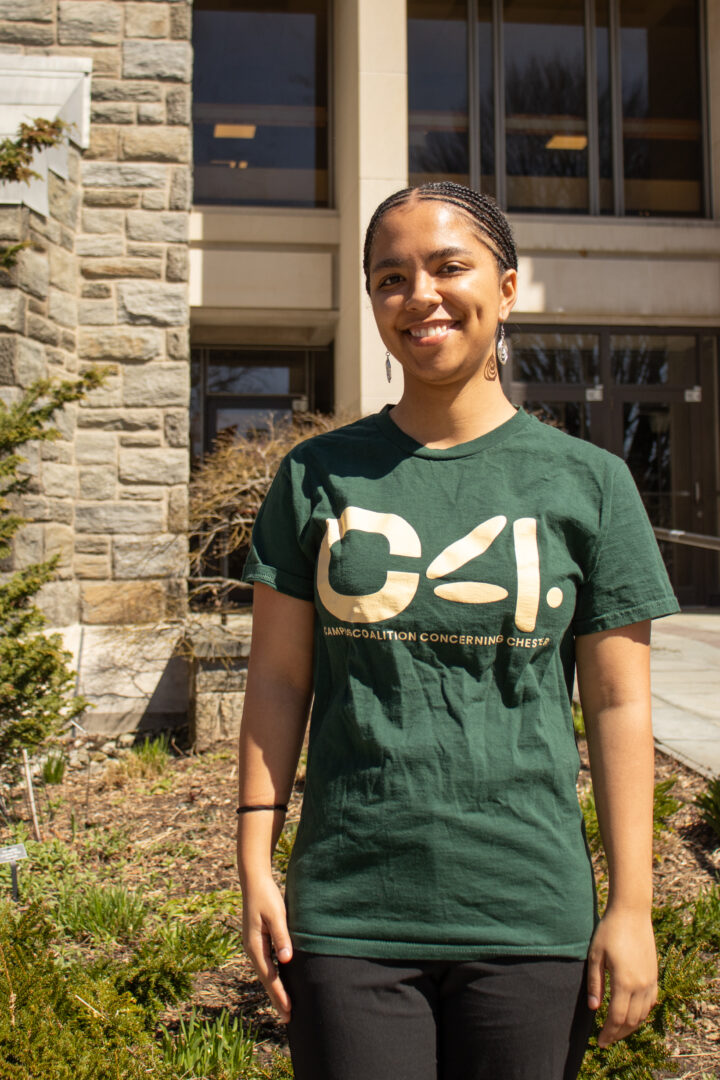
Serafia Cecil
“People want to believe ‘oh that just happens in Chester.’ But that’s not the case.”
Serafia Cecil is a member of C4 (Campus Coalition Concerning Chester), an organization that works to mobilize college students, some of whom are from Chester, in support of CRCQL. She is pursuing an English literature major at Swarthmore College.
”Growing up as a Black person, I was taught to think of racism in a systematic way. I think this is such a salient, obvious case of environmental racism.
I didn’t have any knowledge about Chester and its culture, or issues happening there prior to coming to this region. I want to have an awareness of my neighborhood around me, how I am interacting with it and the impact I have on it.
Even within the region, I feel like there are different levels of awareness at the different meetings we go to. Pollution affects this whole area, Chester being most impacted. But there are different levels of awareness of how impacted we are here in Swarthmore, and how responsible we are here.
There’s a learning curve when joining an established organization that is dealing with longstanding issues. It requires that you have and maintain, not a caution, but a self awareness. I’ve learned a lot and gotten to know the area and the people through working with CRCQL.
Everything is connected. I was just talking to a class today and we were looking at PCIST (People’s Cancer Incidents Screening Tool) data, which looks at different cancer incidences over 20 years.
Part of what we look at are the highly elevated cancer rates throughout the region around Chester City. But I was just looking at the Swarthmore data with this class, and there are similarly really disturbingly high rates of cancer, many times the national average for some types of cancer.
It shows that, while the brunt of the impacts are disproportionately felt by the City of Chester, it’s like Ms. Zulene always says; ‘there’s no borders to air or to pollution.’
So in that sense, I’d hope anyone concerned for their health in this area would be aware of this and consider the impact of this on your health. I think it’s a fact that often goes unacknowledged or ignored, partly because people want to believe ‘oh that just happens in Chester’. But that’s not the case.”
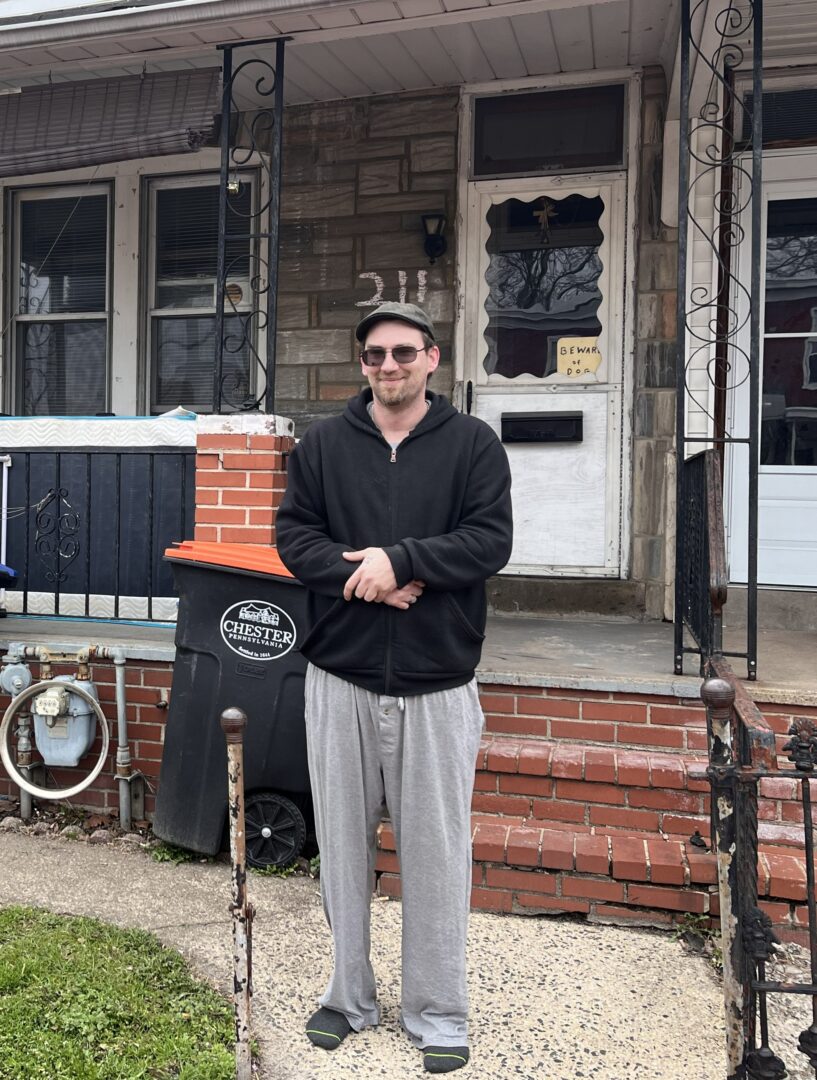
Shane Grove
“Two, three in the morning, this whole street is just lined with trucks. I can’t believe that plant has that many trucks.”
Shane Grove moved to Chester in 2006. He lives less than 2000 feet from the Reworld Incinerator.
“Chester used to be beautiful. I’ve lived here on 3rd Street, and then all the way up on Highland Avenue. I wouldn’t live back up that way anymore. I’d rather live down here because I know everybody on my block and they’re so nice.
But if you start going up Highland Avenue, the air quality from down here to up there is totally different. Down here, it’s harder to breathe. You’ll smell the electric company, you’ll smell the river and then you’ll smell these three recycling plants right behind us. And then as soon as you go down 291, there’s two more plants.
The quality of air is pretty bad. It’s not like something that will affect you immediately, but as soon as you walk past that train station, you can tell the difference in quality from down here to up there.
Two, three in the morning, this whole street is just lined with trucks. They’re lined up all the way down there. It’s two or three in the morning, and it’s just 18 wheelers lined up from the bridge all the way down. I can’t believe that plant has that many trucks.”
A lot of people, like my mother, have gotten pneumonia down here out of nowhere. She’s lived here about the same time I have. You come outside and you just don’t feel good at all. You’re drained of energy.
On nice cool days it’s fine. But once you start getting into that 80, 90 degree weather in the summertime, that’s when it really starts getting bad. I know the people across the street and it’s even worse down on that side.
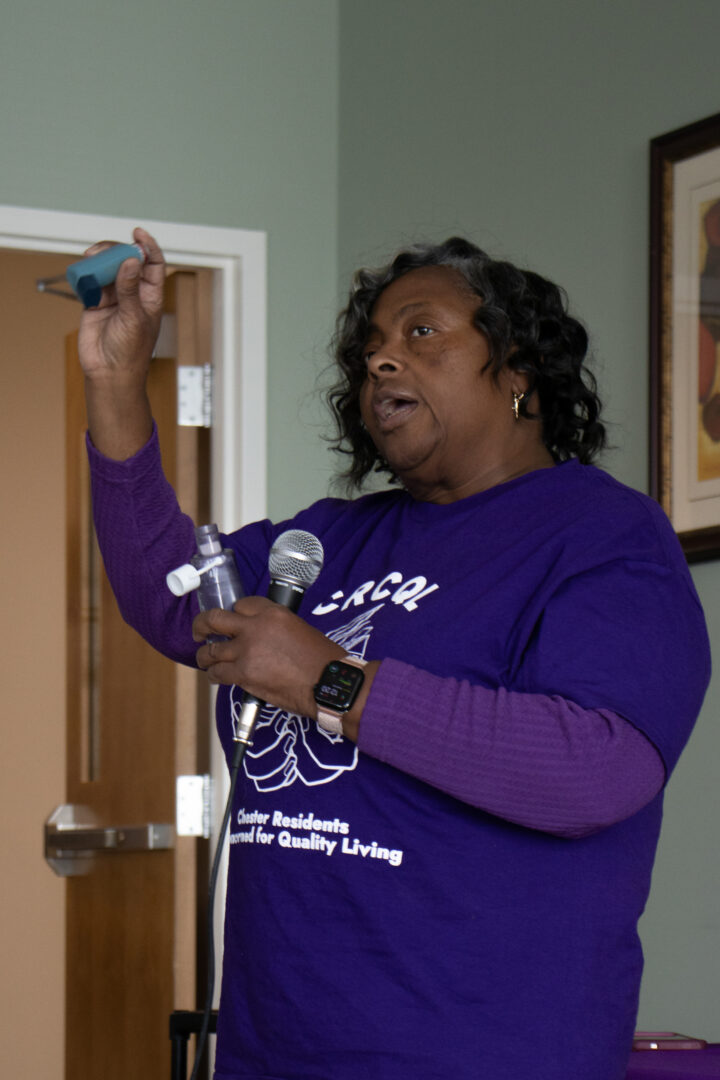
Carolya Tillery
“I met a bunch of people with the same story. I started to understand that this is more than just coincidence. There is something going on in this particular city that is causing a lot of people to be sick.”
Carolya Tillery is a resident of Chester and is a member of CRCQL
“I used to come up here with my husband. Chester was so beautiful. It was a vibrant, happy place. I come from Philadelphia, and there, it’s a bunch of row homes. So that’s what drew me to want to move to Chester.
I came here vibrant and alive. I have two degrees and my whole future ahead of me. I came here and in three months, I was disabled. My lungs were totally numb, and I was in a fight from that point on. It’s like dominos. That one piece knocked the whole thing down.
My whole life shifted. Now I wasn’t as productive and giving to my city or giving to anyone anymore because I couldn’t work. It changed my whole life.
It’s like a desert now. We have no pharmacies. We have no hospitals. We have no supermarket. You don’t have many people coming in, people wanting to stay, people wanting to build. When they come here, there’s nothing. They know they’re coming to a mountain that is too hard to overcome.
You go to any other place where there’s a beautiful waterfront, and it’s full of life and full of people who want to be a part of it. I go down there and I can only be there about five minutes tops, and then I end up with an asthmatic attack because of the air. It’s concentrated on the water. So I never go down there. There’s the whole side of Chester I don’t get to enjoy.
I would smell that bad smell. But I had no idea that it was because of the incinerator. I wasn’t here when it first came and because there was no communication amongst people.
I thought I was the only one suffering and struggling with breathing and going through all these different health problems. But then I met a bunch of people with the same story. I started to understand that this is more than just coincidence. There is something going on in this particular city that is causing a lot of people to be sick.
Philadelphia doesn’t really know that Chester exists. I didn’t know it existed until I came here. We never knew where our trash went. We just knew they came and picked it up. Philadelphians aren’t told where their trash is going, the same way it’s not being told to people in New York City.
I think that if the people knew what was going on and how it affected their neighbors, they would think differently and put pressure on their leaders to do a better job than what they’re doing.
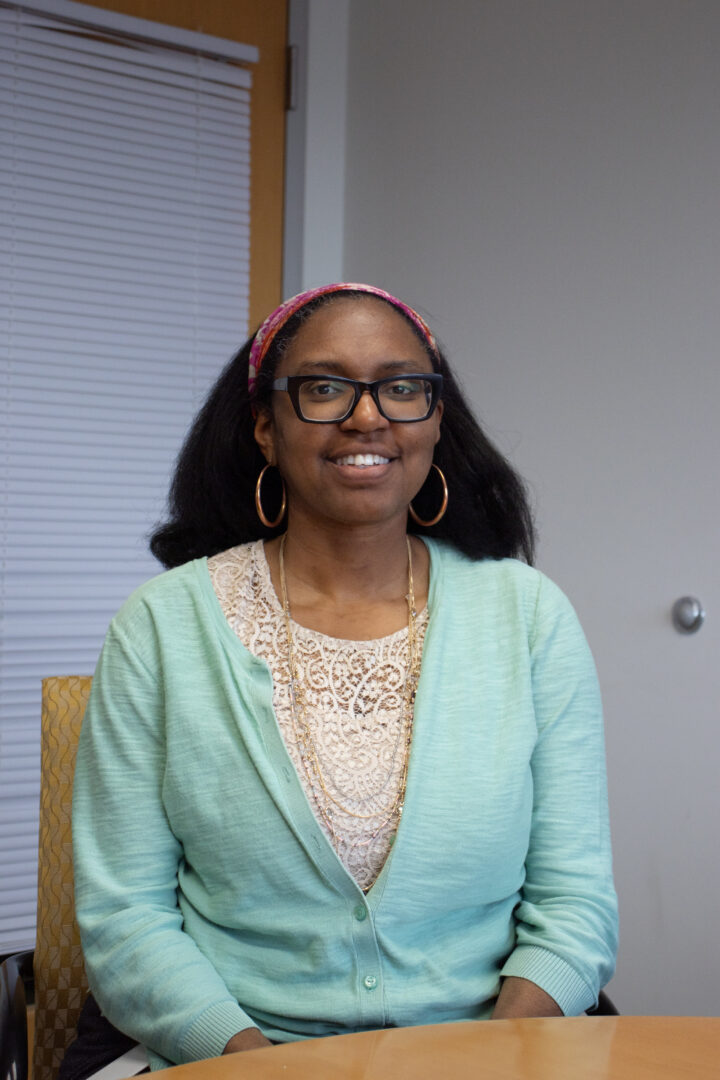
Dr. Kristin Motley
“People don’t often think about where they live as being a factor for what diseases they may be at risk for. And unfortunately, your zip code can absolutely predict your health outcomes.”
Dr. Kristin Motley is the City of Chester’s Health Commissioner. She grew up in Chester. She founded Health Care Solutions of Delaware Valley after moving back to the area after school in 2010.
My dad has had three different types of cancers, and they’ve only been caught because they were looking at something else and saw a tumor. Otherwise they wouldn’t have been caught.
Cancers are diagnosed at a younger age for people in Chester. They’re often aggressive, they’re caught later, so people are dying, they have a higher mortality rate. There’s no healthcare system here, which is also connected to the social economic demographics in Chester.
The root, the base of it, is the environment. Until we fix those issues, we’re not gonna fix a lot of the other problems that we see that show up in our lives like heart disease and diabetes, kidney disease and strokes. All of these things that have plagued our community, it’s tied to the environment.
People don’t often think about where they live as being a factor for what diseases they may be at risk for. And unfortunately, your zip code can absolutely predict your health outcomes.
When you look at the risk factors for disease, they always talk about race, and when they talk about race, they talk about low income. It’s part of the way that we’re taught to think about this.
In terms of Chester residents, they think of it as being because we’re Black. Because you’re Black, you have a high risk of diabetes, you have a high risk of high blood pressure, heart disease. That’s how we learned it in school. Another thing they talk about is that because of our genetics, we’re predisposed to certain risks or to certain diseases. And that’s true to some extent.
However, what we are missing, what’s not being taught in pharmacy schools, in medical schools, in nursing schools, in any of the health professional schools, are the environmental aspects driving these health disparities. It’s a big miss.
I don’t think that people are thinking about the impact of living next to a trash incinerator and all of the toxins that are spewed out of it and inhaled every day. I don’t think people are really tying that to their health.
Reworld touts that they give back to the community, and they may. But in my mind, they have not given back in a way that compensates for the healthcare crises that they cause in this town. It’s a drop in the bucket, as far as I’m concerned. What they’ve given is nothing compared to what people have to go through and suffer from, from the poor air quality that they contribute to.
We just can’t tolerate it anymore. It is not good for the environment, it’s not good for human health, it’s not helping anybody. It is only hurting people.”
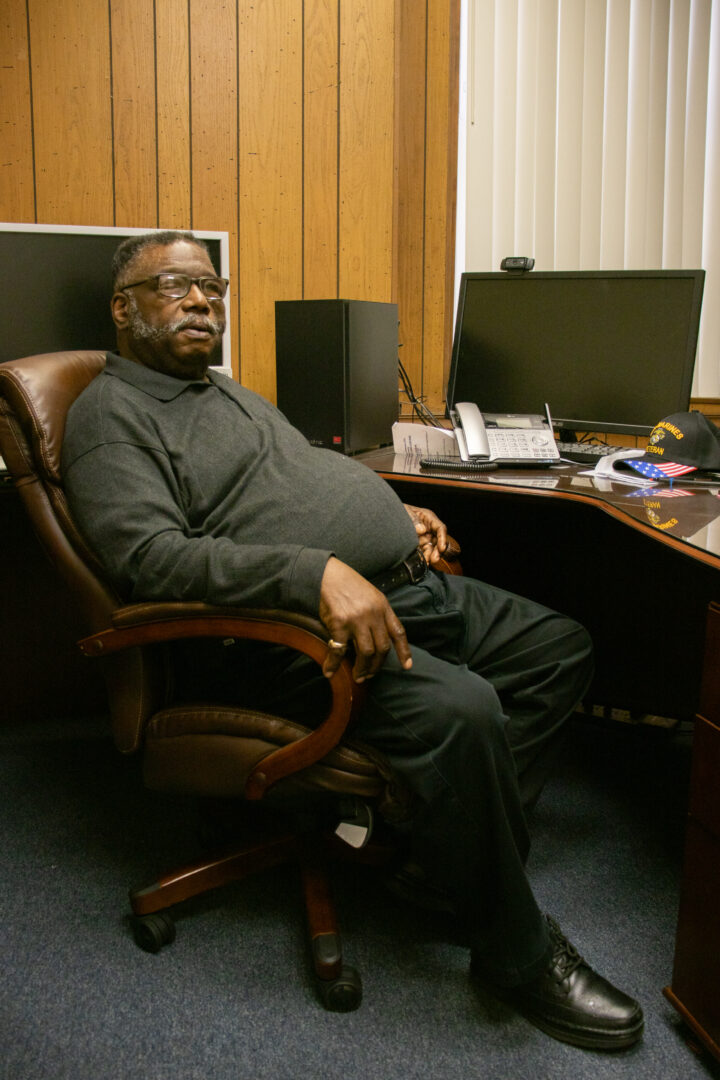
Dr. Horace Strand
“Bringing Philadelphia trash down here is not hurting Chester. Not one bit.”
Dr. Horace Strand founded the Chester Environmental Partnership, an environmental watchdog organization, in 2006. As chairman, Dr. Strand has worked with the City of Chester and representatives of industries, including Rewold, to address community concerns and monitor their operations.
“The Chester Environmental Partnership was organized when we realized that a trash-to-steam plant was placed in Chester, about 90 feet from residential properties. My church was three to four blocks away from the plant.
When Westinghouse ran the facility, there was a lot of trash, dust, and debris from the trash trucks coming into the community.
Covanta came in with a different attitude. They were more respectful to the community. They promised to be good neighbors. They showed that they were interested in hiring residents and that they wanted to operate efficiently.
We don’t trust any industry to operate independent of itself in the community without being monitored. We can’t depend on the regulatory agency alone to protect us. We have to protect ourselves.
That’s what the CEP has been about. We’ve been here consistently, and been meeting for years doing what we do. We meet with the industry liaisons on a regular basis. We require industries to show that they’re good neighbors and that they support the community. I don’t have a problem with industries that take care of the community’s ills.
I think the idea of taking trash and turning it into electricity is a brilliant idea. We need these industries, whether we like it or not. My only concern is that they do it in a safe and efficient manner and not violate the Clean Air Act or their permit, and they respect the community.
Covanta has a permit to bring in so many tons of waste each year. If they don’t get it from Philadelphia, they’re going to get it from somewhere else, and nobody can stop that. Philadelphia isn’t going to make a difference.
Philadelphia will just lose the convenience to send down their trash in an orderly manner to Chester. Chester is just a stone’s throw away. It’s cost efficient to do that.
So it’s gonna cost them more to take it someplace else and it may not be as environmentally friendly where they take it. I’m not trying to favor one over the other, but I’m being realistic.
Bringing Philadelphia trash down here is not hurting Chester. Not one bit. Because what is it? It’s trash. What is that facility? A trash-to-steam plant. Do they burn it? Yes. What difference does it make where the trash comes from?
Can they burn trash from New York? Yes. Can they burn trash from New Mexico? Yes. They can burn it from China as long as they stay within the tonnage that they’re permitted.
This is all a bunch of political nonsense to get attention in arenas where you can get attention. Show me one fact that I say that isn’t true.
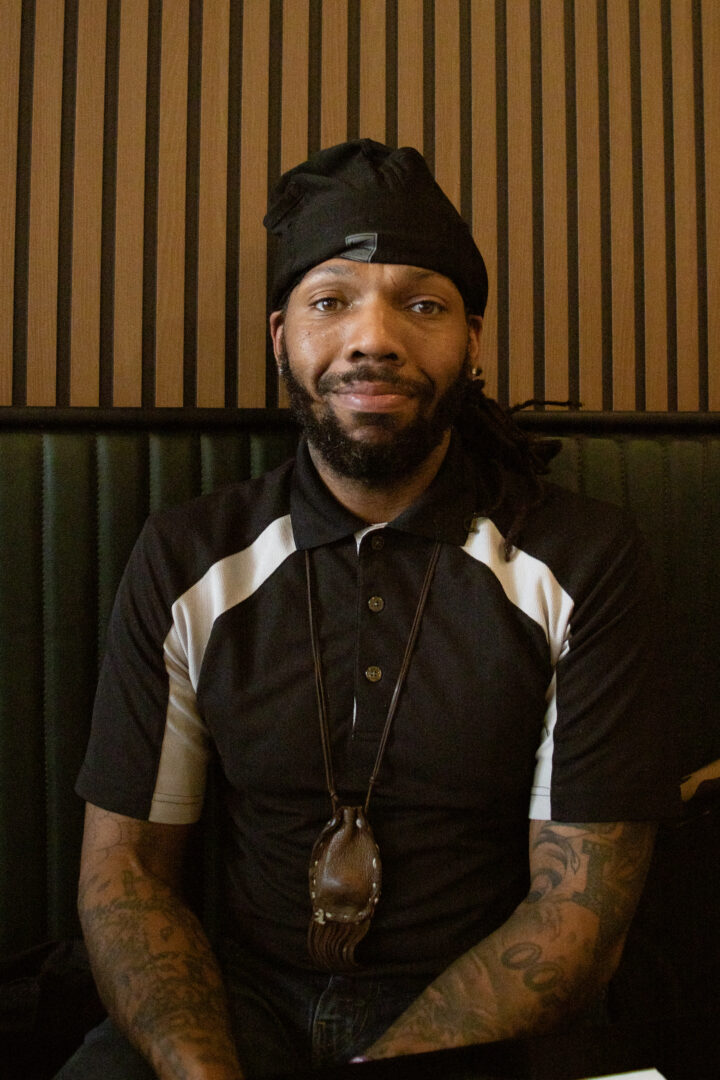
Dr. Nolan Fontaine
“We have a funeral culture here in Chester.”
Dr. Nolan Fontaine was born and raised in Chester and has been active in CRCQL since he was young. He is the Youth Coordinator of CHOICES, CRCQL’s youth leadership organization which provides a place for students to engage in environmental justice activism.
I went to Ms. Zulenes’ cousin’s funeral last week. She was my classmate. And younger than me. She had three kids. I was just talking to her six months ago about moving into her new house. She was ecstatic.
We have a funeral culture here in Chester. There are patterns that most people have to go through after someone passes. People have to choose an undertaker. We have a multitude of undertakers here in Chester, not just Christian, but also Muslim.
There’s a culture of tending to the family, where the family will receive folks, where you take cards, paper products, toiletries, flowers. There’s the food culture around what foods you take to the family prior to the funeral, what foods are they gonna have during the repass, and who’s going to cater.
The higher mortality rates is absolutely why we have a funeral culture. It’s complicated by us not having a hospital, people not able to get preventative care and mapping out a treatment plan for themselves.
A large portion of CHOICES students have asthma or some type of bronchial disease. It’s something I’ve dealt with as a child. It’s something my family deals with. It’s something that my mother dealt with.
I think with the young people I work with, having that sense of social awareness, they want to get involved to do something about it. This is their space where they feel like they can do something that is positive and constructive and make change.
This bill won’t just make an impact here. It would make an impact for all of the boroughs and towns in Delaware County. It would make an impact in Philadelphia and its residents
It’s a nudge that will make a meaningful impact for other movements we want to make on this pollutant industry. I absolutely think it’s gonna make an impact as long as we continue to talk about that and other solutions that will come after. Because it’s not gonna stop here.
If you wanna imagine what it’s like living in Chester, go outside to your trash can. I call residue at the bottom of your outdoor trash can trash-can-juice. It’s really stinky and unpleasant.
A lot of days, that’s what it smells like in Chester. And even though they send their trash here, I would never want them to go through that. We also contribute to our trash. They just contribute a little bit more.
I’m always going to insert myself as being an American Indian Man. Because this is nothing but a tactic of an almost 500-year war. And we’re still here. We’re still not dead. We’re still not moving. I bet you they move before we do.”
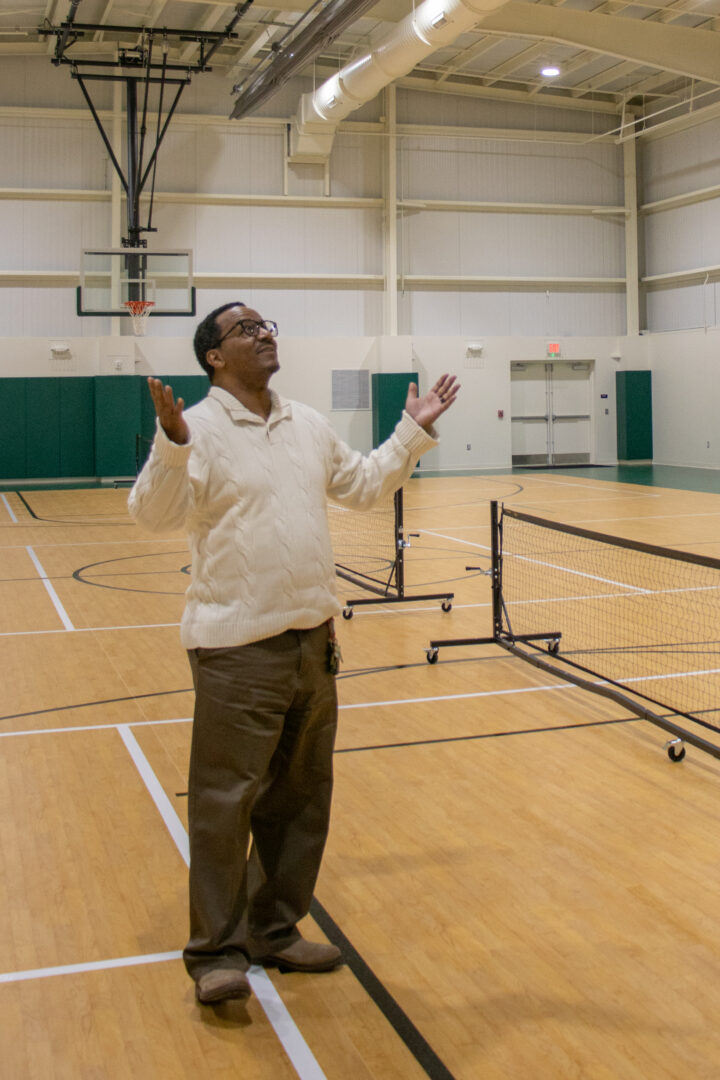
Mayor Stefan Roots
“The biggest impediment to growth in our city right now is that incinerator.”
Stefan Roots was born in Chester and was elected as Mayor of the City of Chester in 2024.
The biggest impediment to growth in our city right now is that incinerator. So we have to get that thing out of the way. One of my favorite statements is ‘I’m not gonna be that guy who stands between the bulldozer and the river if it came to pushing that thing in.’
In the absence of that incinerator in Chester, there’s gonna be so much development. There will be so many union jobs doing anything from infrastructure to building new buildings. Every trade would be engaged for years. It would open up the waterfront in ways that people can’t even imagine.
We’ve got to try to stop the food from coming to the monster. The first step was Delaware County announcing that they’re gonna wean themselves off of sending trash to the incinerator by way of going to their own landfill.
I would not have gone to Philadelphia if that move hadn’t been made first. I couldn’t do it in good conscience to say, ‘Hey, stop sending your trash here’ when Delaware County is still sending theirs.
We’re trying to end incineration, the burning of these materials, anywhere. It’s just bad. The smokestack that comes from the plant here is 300 feet in the air. Some of the lighter material, the lighter chemicals, the lighter pollutants, miss Chester altogether. They just get caught up in the wind.
We would love for you to care about Chester. We’re people just like you are. But just imagine if there was a facility that burned a million pounds of trash a day right next to you. That’s how we are down here.
We’re a community of people just trying to live, work and play. And we’re burdened with all that trash being burned here every day for the last 35 years. The impact on the health and the economy and the image of Chester is shaped greatly by that one business being here.
We’re not asking you to care about Chester. This is a bigger thing. It’s caring about human beings in general. Whether it’s coming to Chester or Camden or Conshohocken, you should care about how your trash is handled.
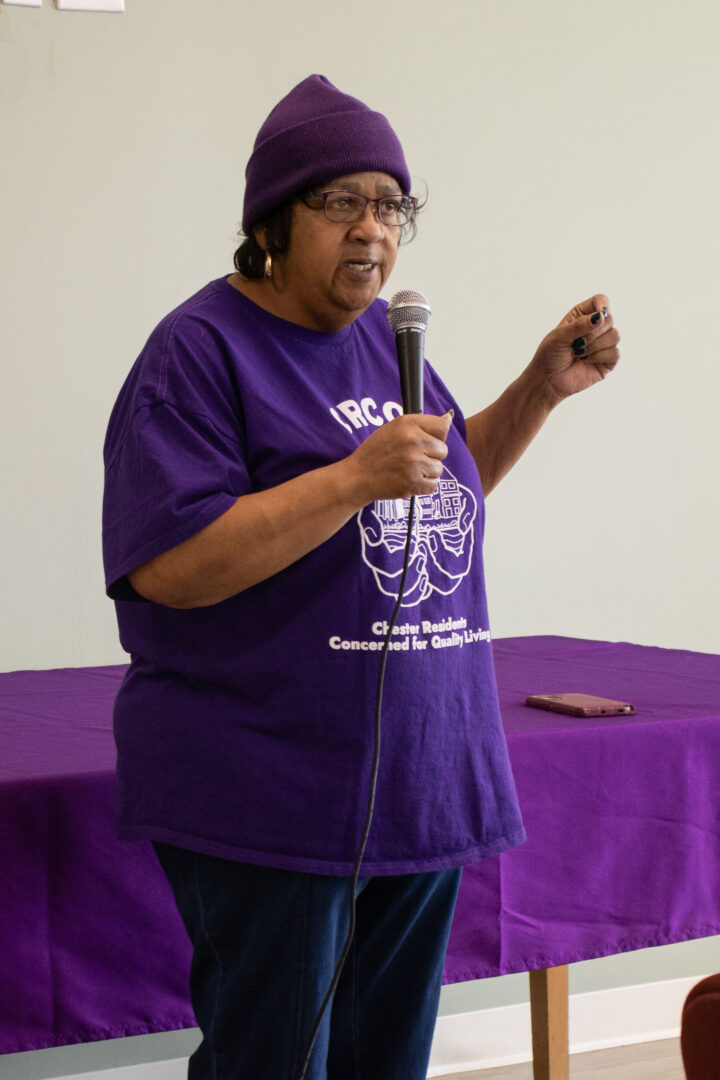
Zulene Mayfield
“As long as we have polluting industries in Chester, we’re going to have to fight. This is not a battle convenience. This is a battle for survival.”
Zulene Mayfield, a resident of Chester and a founder of CRCQL, has been at the forefront of the fight against industrial pollution and environmental racism in Chester since the early 1990s. She continues to lead CRCQL, a group she was instrumental in founding.
There’s no place like home. Think about where you were raised and the emotional and the physical ties. It’s easy for people to say, ‘Well, if it’s that hard, y’all should just move away.’
I did that, I tried it, but my family brought me back. My mother lives here. That’s the essence of who you are. You can’t turn your back on what you love. There’s a financial component. And then there’s a love component too, of you leaving, but everything you love being right there. Your family, your friends, classmates, your sense of community.
Our fight is always going to be our fight. As long as we have polluting industries in Chester, we’re going to have to fight. This is not a battle convenience. This is a battle for survival. We got these people wanting to study and collect data, while we have real people that are dying.
I just buried a 41 year old cousin last Friday. 41 years of age, one-year-old baby, an eight-year-old, and a 21 year old. She died of breast cancer.
These are hard battles. They’re long, they’re drawn out. Fear, anger, those things come into play and keep us going. And love. When you love your family, you love your community, you want the best. And this is about the total opposite of the best of you can get.
I’m optimistic about our community’s future. I think that we have the right leadership for right now. It’s been corrupt. We haven’t had a vision. Now, people can see a vision. We can see things happening, we can see things changing.
You have to be a part of that change if you want it to matter. It just doesn’t happen. You gotta work for it. And there are people that are willing to work for a better Chester.
It really pisses me off when people that are on the outside, people from the suburbs, the politicians, the polluters, tell us what we need or what we deserve. They always want to give this false narrative that because our zip code is 19013, that we shouldn’t have any aspirations to live with better quality of life, to breathe cleaner air, to have aspirations for our children and our community.
People forget about the sense of interconnection. The asinine logic is that ‘I live in Philly. That’s happening in Chester.’
It’s like Jeff Brown said, ‘Oh, that’s Chester. I don’t care about Chester.’ Well, you idiot, you breathe what we breathe. You breathe. So you ought to care what’s going on.
There has to be a certain amount of, not empathy, but understanding, that we’re all connected. A perfect example was wildfires up in Canada. All the way here on the east coast we got the haze, we got the smell. When Mt. Saint Helens blew, we got the embers, we got the ash. I think it showed people how small our world really is.
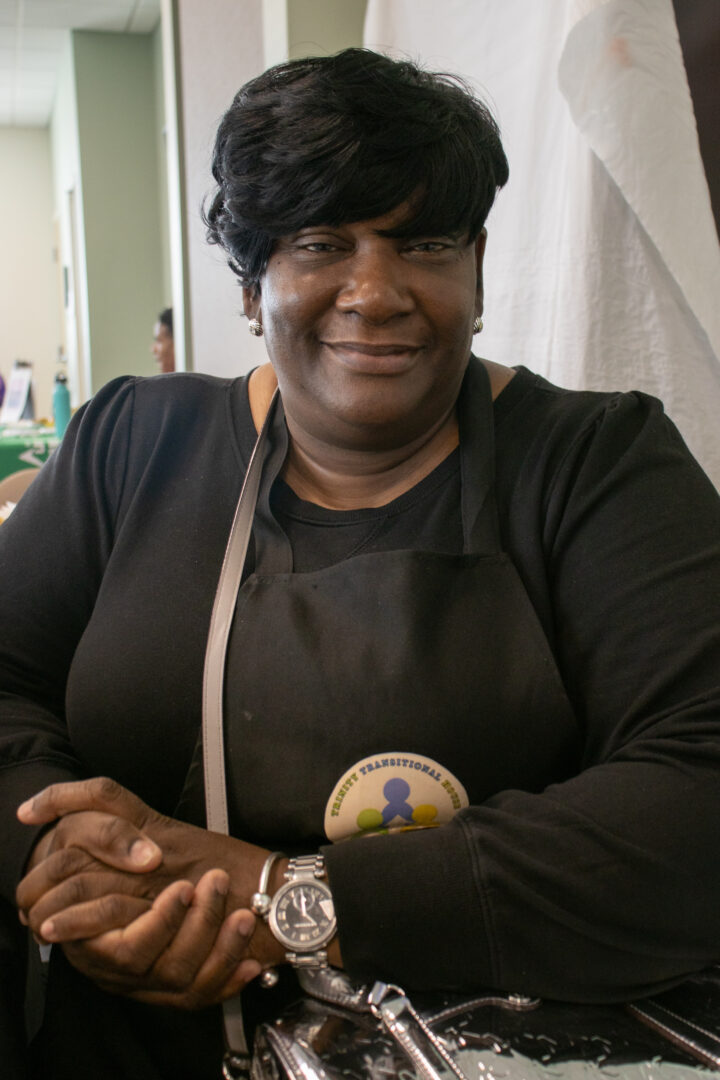
Patricia Thorpe
“I would think that with Philadelphia being about brotherly love, we’re just the surrounding area. So love on us, too.”
Patricia Thorpe was born and raised in Chester. She runs Trinity Transitional House, which provides services for displaced women, single mothers, and children experiencing housing instability.
I moved back to Chester from Ridley Township in 2009. When I had my son in 2011, I found out that I had a nodule in my lung. It’s a small hardened area, an abnormal growth to the tissue. The doctors watched it for years to make sure it didn’t grow.
Since my son was born, since day one, he always gets this upper respiratory infection in January or February that turns into him needing to use a nebulizer. And for the last five years, I’ve been getting the same kind of upper respiratory symptoms, too.
Had I known that I was going to have a baby a year or two later, I would have never moved back to Chester.
We’re suffering. Our kids are suffering. Our community is suffering. Not just with asthma, but with COPD and cancer. And it is not fair. It’s not fair. We should all be able to live in an environment with clean air to breathe, and we can’t.
The doctors tell you ‘don’t open up your windows.’ And when you do open up your windows to get fresh air in, that starts the upper respiratory infections and the coughing and the asthma triggers.
If we can get Philadelphia to stop burning their trash, then what’s next? Is it New York? If we stop them from burning their trash here, then maybe that will run Covanta right on out.
It’s a shame that people made these back-door deals to even have Covanta in a community such as ours. But they did, and now we’re trying to do something to rectify the situation. So one at a time. One at a time. We just take one at a time. I would think that with Philadelphia being about brotherly love, we’re just the surrounding area. So love on us, too.”
Be the first to comment