
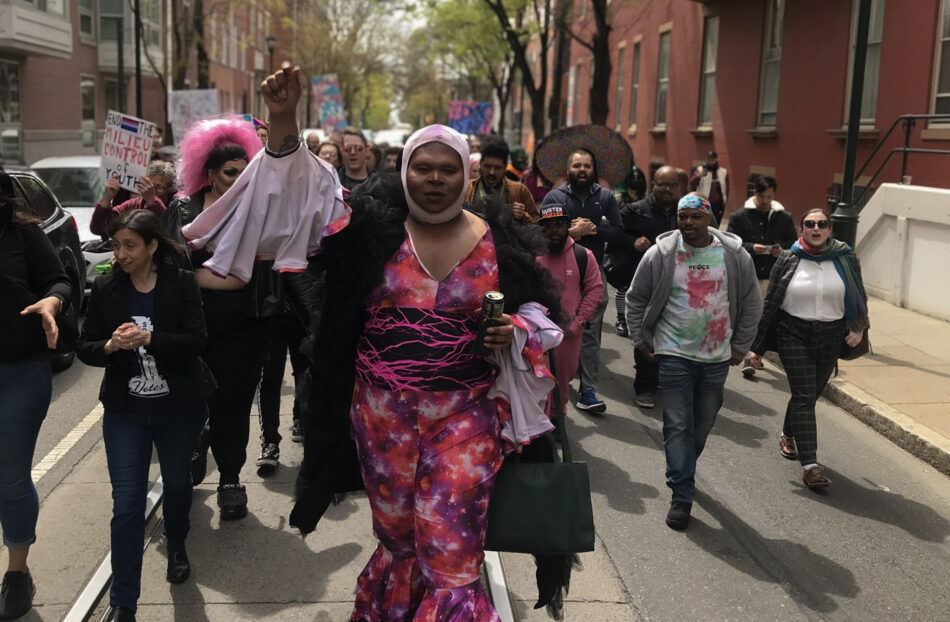

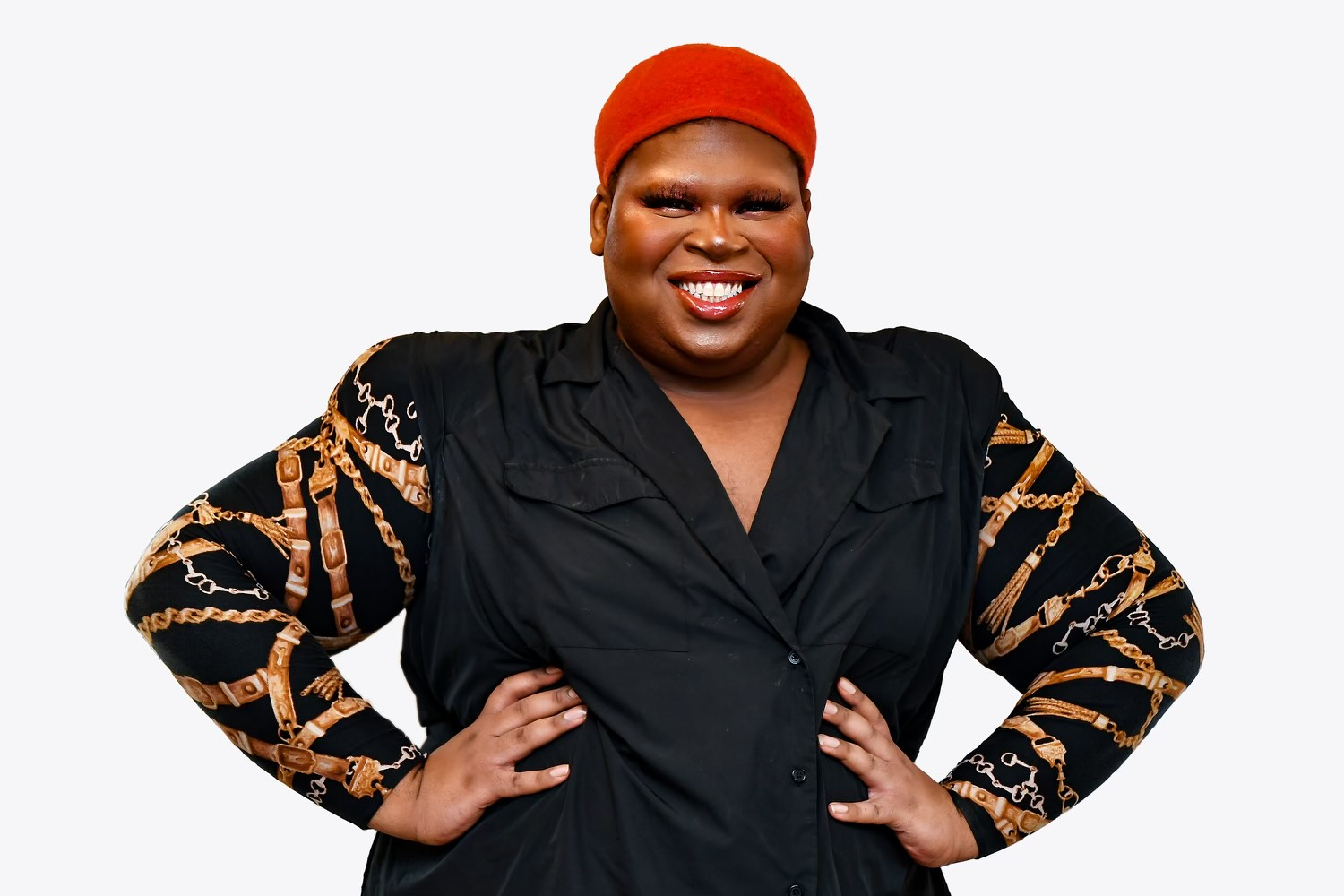
As the Trump administration intensifies its political attacks targeting transgender healthcare, LGBTQIA protections, and mental health services for queer youth, Philadelphia drag queen and community organizer Ebony Ali is turning to art as a form of resistance.
Ali—who also goes by Icon Ebony-Fierce—is a longtime community organizer and program manager at Galaei, one of Philadelphia’s longest-running organizations serving queer and trans Black, Indigenous, and people of color. Her work centers on intervention and peer-based strategies for transformation that help trans women build and sustain their lives through HIV prevention and education, sisterhood, and healthy habits.
The backlash of the Trump administration’s crackdown has had tangible consequences in Philadelphia and for the communities that Ali works with. Federal funds intended to support the William Way LGBT Community Center’s wellness resources and programming were removed from a congressional spending bill. The Philadelphia Orchestra’s annual Pride Concert in 2025 lost a $25,000 National Endowment for the Arts grant—one of the nearly 560 grants pulled due to federal funding cuts. After signing Executive Order “Protecting Children from Chemical and Surgical Mutilation,” the Trump administration unsuccessfully subpoenaed confidential patient information from Children’s Hospital of Philadelphia, one of the nation’s clinics providing medical care for transgender and gender-nonbinary minors.
Through drag, nightlife organizing, and political demonstrations, Ali has helped cultivate spaces where queer and trans people of color can create art, challenge norms, and support one another.
Philadelphia Neighborhoods spoke with Ali about drag as activism, the importance of QTBIPOC-centered spaces, and how queer communities in Philadelphia are organizing in an increasingly hostile political climate.
Q: When did Ebony Ali become Icon Ebony-Fierce? How did that persona develop?
A: It was before drag. I was just coming up with fun nicknames, only because I’ve always been into fashion. “Icon” was inspired by different celebrity icons and different legends. “Ebony” represents being proud of my heritage. And “Fierce” was this component of just being fierce. Being ferocious and being unafraid. Being who you are.
Q: What is the relationship between your performances as a drag queen and your activism?
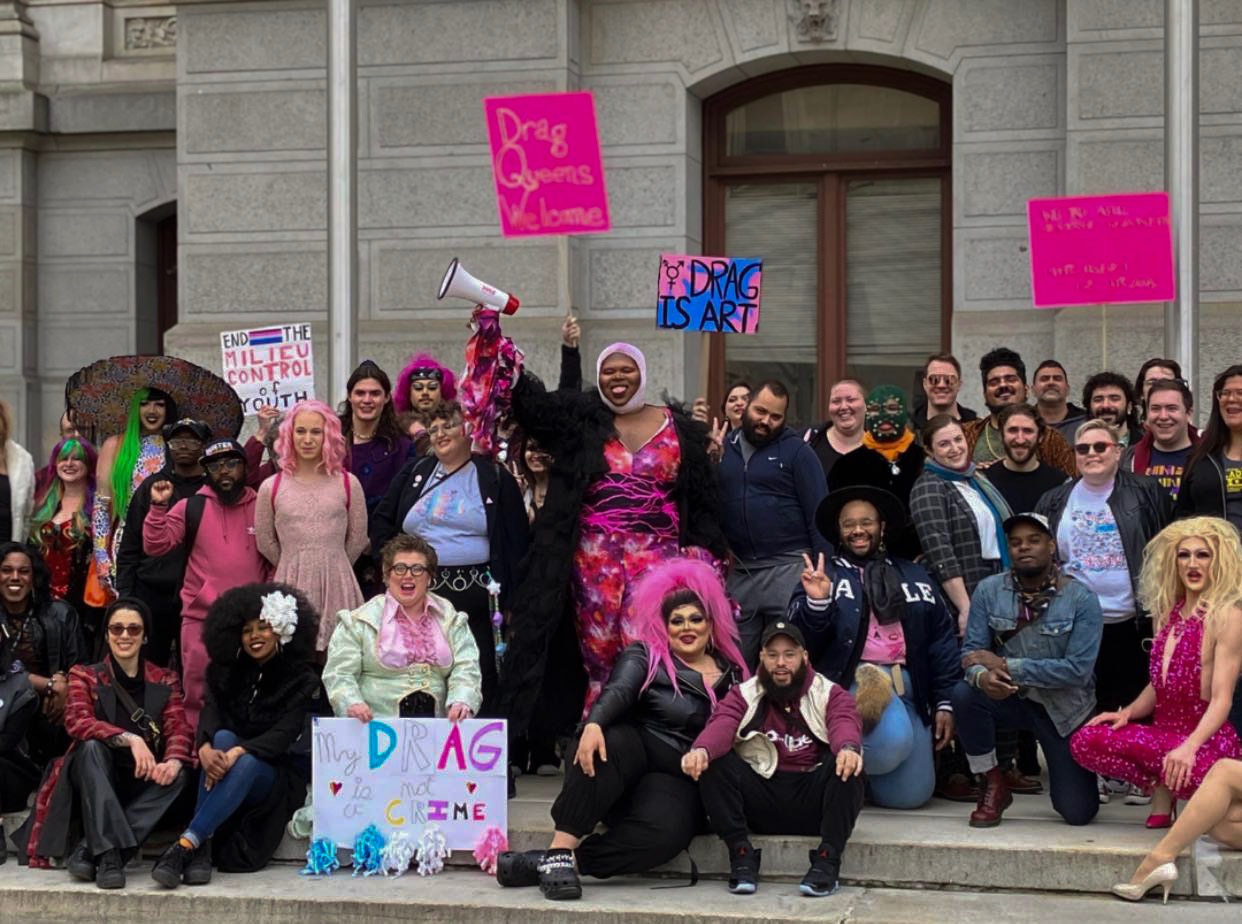
A: While it’s beautiful in a lot of ways, Philadelphia has a lot of issues when it comes to racism and transphobia. There’s a very long, very well-documented history of racism in the Gayborhood and transphobia to the point where I’ve done a lot of protest numbers. I’ve done a lot of demonstrations and actions in drag. Nothing makes a bigger statement than a six-foot-five Black drag queen in the middle of City Hall talking through the numbers about what’s happening and what the issues are. Whether it’s police brutality or racism.
Q: Can you describe the significance of this current political moment for the queer community?
A: I feel like a lot more queer people are activated and speaking up against fascism. There’s still a lot of work to be done, but it’s different than what it used to be. I feel like queer people have really done well with not taking any sh– from people and not tolerating bullsh–. People have been called out and canceled for way less. Philly queers do not play. Even if it’s a teachable moment, it’s going to happen then and there.
Q: Talk about the events that you have curated. What is Phreak n’ Queer?
A: Phreak n’ Queer was a music and arts festival. Very DIY. It was meant to be a variety of different art expressions when it comes to the queer community, but it’s against what you will see in the mainstream. We were creating a space for QTBIPOC people, where there weren’t spaces for them before. It’s necessary because in the last decade, it was not a priority. A lot of QTBIPOC people were either not hired, or weren’t paid fairly, or were tokenized. I’ve experienced all three.
Q: What are QTBIPOC youth in Philly facing right now with the attacks from the Trump administration?
A: The ban on trans healthcare is a really big one. Employment in general, access to housing, access to education, and access to basic things that people need. It’s the same story that’s been told forever: that queer people don’t deserve those basic things. A lot of young queer people have issues finding a regular job, because Pennsylvania is an at-will state, which means they have the right to fire you for whatever reason at any time. That’s why there are a lot of mutual aid campaigns going around. Because somebody cannot eat, or somebody cannot pay their rent, or somebody got fired from their job, or somebody all of a sudden has to move out. They got kicked out of their family’s place, or they got sick and have a whole host of medical bills.
Q: In the current political climate, what does being a drag artist feel like?
A: We warned people that this was going to happen years ago. This administration is not really going to stop us from doing what we want to do. I don’t know what’s going to happen, but I do know that people are not going to stop.
Q: What keeps you motivated when the work feels difficult or impossible?
A: This work is bigger than me. There are people out there who can’t even eat. There are people out there who have it a lot worse, who need us to be present and be there for them. We can be burnt out and we can take a break, but we can’t get to a place where we completely peace out. We need queer spaces, and we need people there to run them so they can be available to communities. Learning that it’s bigger than myself motivates me.
Be the first to comment