
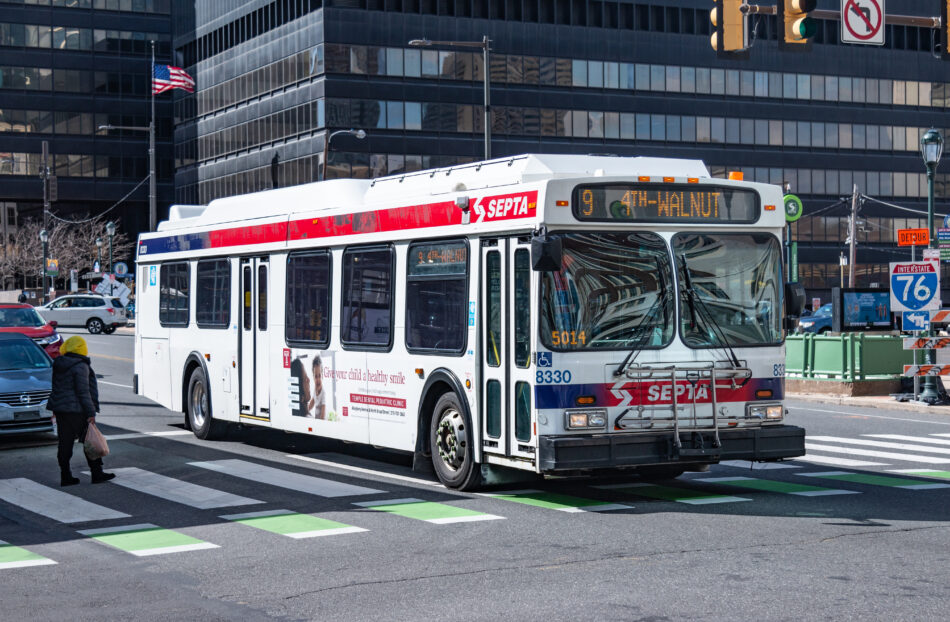

Philadelphia students are asking City Council to expand SEPTA’s Student Fare Card program, arguing that restrictions on when and where they can use their free transit passes prevent them from fully participating in after-school activities, jobs and other opportunities across the city.
Aiden Frazier, a North Philadelphia high school student who runs track, says the cost of traveling on SEPTA can make it difficult to stay after school for practice. When practices run late, his mother must pick him up or pay for an Uber.
“When practice gets out late, my mom has to come pick me up or pay for an Uber if she can’t. That’s money that families shouldn’t have to spend just because a student wants to participate in an after-school activity,” Frazier said.
Frazier, who attends Multicultural Academy High School, was one of a dozen high school students who testified before the Committee on Transportation and Public Utilities during a hearing hosted by City Councilmember Rue Landau at City Hall on Oct. 6. The hearing focused on the future of SEPTA’s Student Fare Card program, a free pass that 49,000 School District of Philadelphia students rely on to get to and from school every day.
“Transportation should not be a barrier to getting to school or participating in our communities,” Frazier said.
Currently the Key cards are given to students who live more than 1.5 miles away from their school. They are valid for up to eight trips per school day from the hours of 5:30 a.m. to 8:00 p.m. and can only be used to get to and from school. The fare cards act as regular SEPTA key cards and must be tapped at a farebox or turnstile. They are available throughout the school year, but do not extend into the summer.
Councilmember Landau said that eliminating the cards’ time restrictions and reducing the financial burden of transportation costs would give students greater access to the city.
“Students are filling their lives with so much more than just their education: jobs, sports, extracurriculars, hobbies, clubs. When our transit becomes more affordable and accessible, we’re supporting students, their families, their teachers, and everyone in our city, ” Landau said.
“SEPTA is their key to the city, and currently we are withholding that key.”
Council members raised questions about increasing SEPTA’s projected budget for Student Fare Cards, as well as concerns about teen behavior concerns and safety. Councilmember Curtis Jones Jr. cited the large teen gathering that occurred in Dilworth Park on Labor Day weekend, which according to Philadelphia police, turned violent and resulted in the arrests of 10 teenagers.
“The important part of this hearing is to make sure that those who are doing the right thing get more access and opportunity. But for those who are doing the wrong thing, we need to have some checks and balances involved,” Jones said.
Philadelphia School District Superintendent Dr. Tony B. Wallington Sr., and other key members on the Board of Education as well as SEPTA representatives were also in attendance.
“Providing students safe, reliable, and affordable access to transit helps them get to school, to after-school activities and jobs, and to the many cultural and educational opportunities our city offers,” Dr. Wallington said.
“Expanding the Student Fare Card to include more [ages], weekends, and summer months would give our young people greater independence and opportunity.”
Expanding SEPTA’s Student Fare Card program to allow students to use their cards 24 hours a day, year-round, would increase the program’s annual budget from $30 million to an estimated $63.8 million, according to Erik Johanson, SEPTA’s chief financial officer. SEPTA assigns approximately 49,000 student fare cards each school year. However, not every student who receives a card uses it, and not every student who uses a card taps it for every trip.
Kayla Garrett, a 10th grader at Mercy Career and Technical School, said the cards are essential to her daily life.
“It’s a weight lifted off of our backs because a weekly fare card is 31 dollars and monthly it’s $124. It’s not just some pocket change that you can hand out,” Garrett said.
Ciera Drayton, a ninth grader at Mercy Career and Technical School, emphasized the need for more reliable fare cards, especially on weekends when students may not have access to a ride. “I wanted to speak up about this because at our school we have service hours we can do on the weekends and our cards aren’t reliable on the weekends. Yes, on the weekends our parents are able to drive us, but what if there’s a situation where they cannot?” Drayton said.
Currently, the SEPTA student fare card is only available to students who live 1.5 miles away from their school.
For students like RJ Campbell, who lives 1.4 miles away, that means walking or biking 45 minutes every single school day just to get to class on time, even in the pouring rain or snow.
Campbell spoke at the hearing in support of expanding SEPTA’s Student Fare Card program, arguing that broader access would help students who rely on public transportation. He said that students like him use the cards to travel to after-school sports, jobs, internships and college preparation courses.
“Students should not have to plan their futures on an expiration date on a card,” Campbell said.
Be the first to comment