
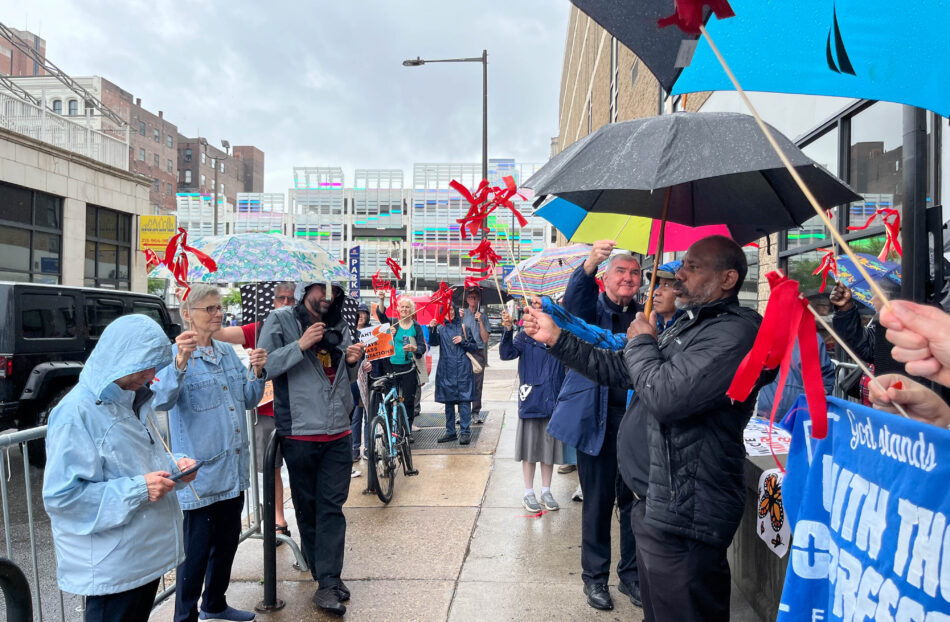

On a rainy Wednesday in May, a group of people gathered on the corner of 8th and Cherry Streets to pray. They were celebrating the Christian holiday of Pentecost by waving red ribbons in the air. Alongside the ribbons, people held colorful signs that called for immigration reform.
“True faith is bigger than a Sunday feeling,” said Bishop Stephen Poyser, Sr. of Poyser Way New Testament Church of God as he led the group in prayer.
The churchgoers — and the New Sanctuary Movement of Philadelphia (NSM) community of interfaith worshippers that accompanied them — chose to observe Pentecost outside the Philadelphia Immigration and Customs Enforcement (ICE) field office to oppose the Trump administration’s immigration crackdown.
This interfaith gathering outside the ICE field office was one of forty gatherings like it that have taken place every Wednesday at noon since November 2025. They are organized by Rev. Christopher Neilson of the Living Church and NSM, a faith-based immigrant rights group. He calls the initiative “ICE Profest 40,” because the vigils are professions of faith rather than traditional protests.
“We’re not in the presence of God because we’re in church, but we’re in the presence of God because God is around us,” said Rev. Neilson.
A different congregation hosts every vigil, with recent hosts including First Unitarian Church of Philadelphia (FUCP) from Center City, P’nai Or from Mt. Airy, and Poyser Way from Kingsessing.
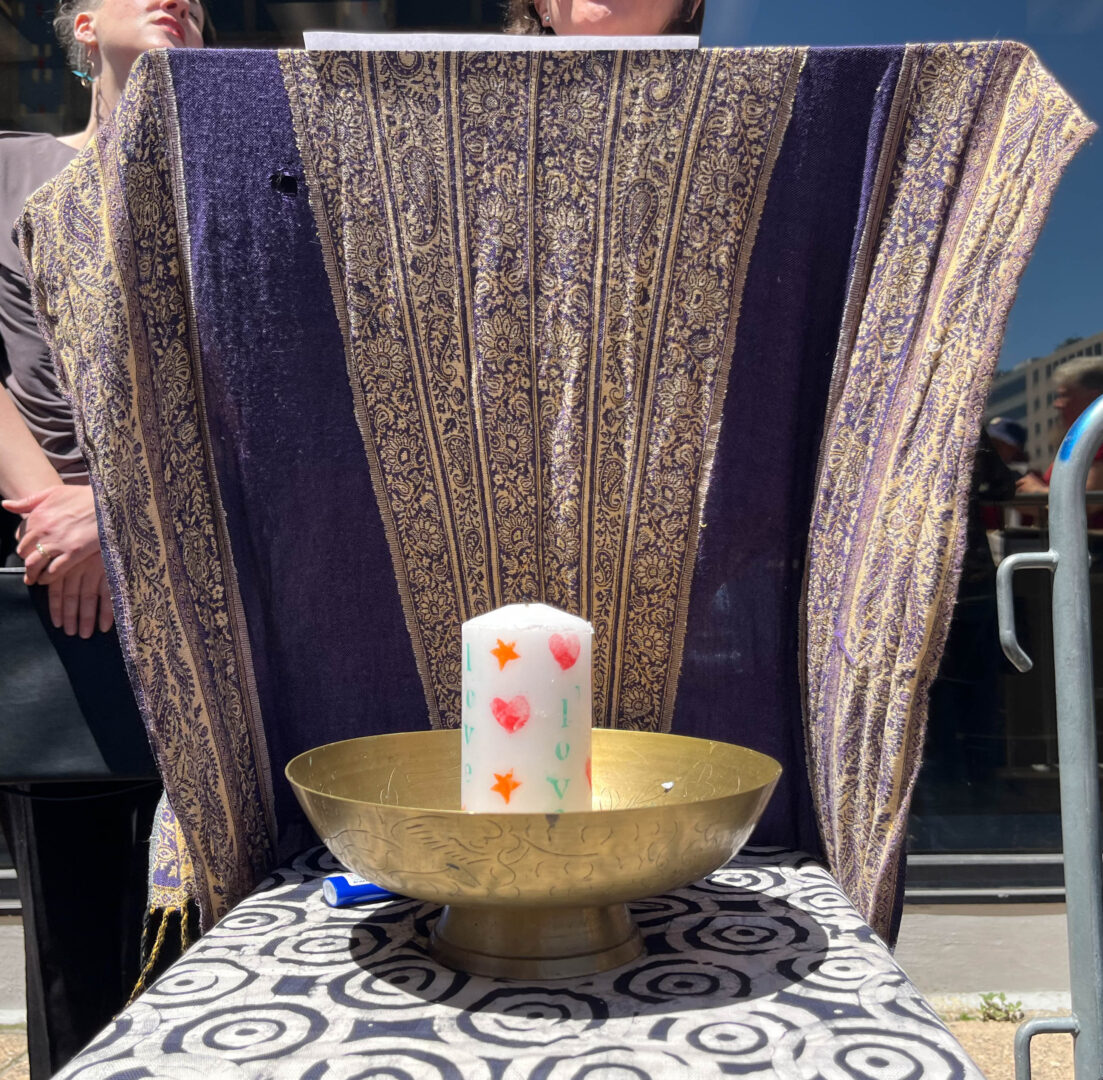
Leaders share news about ICE, read messages from people in ICE detention, and extend symbols of their religion, often building an altar outside of the ICE office to establish it as a place of worship.
Rabbi Linda Joy Holtzman of Tikkun Olam Chavurah has attended and led the vigils since last year. “We know we’re being noticed and heard,” they said, commenting on how some ICE officials and security guards have come out to talk to the worshippers.
Rabbi Holtzman added that vigil attendees also connect with visitors to the ICE office, who are predominantly immigrants and their loved ones.
“Sometimes, we’re able to connect with them or pray with them, and sometimes, they come out afterwards,” they said. “And sometimes, we don’t know if they do.”
Church meets state on the national stage
Rev. Neilson said he was inspired to start the vigils after the Trump administration rescinded a memorandum put in place under Obama in 2011 that instructed ICE to avoid conducting enforcement operations in “sensitive locations,” such as churches, hospitals, and schools.
“What we need to communicate to the Trump administration is that sensitive location is not about a church building. It’s about where we claim it to be,” said Neilson.
David Krueger, the executive director of the Dialogue Institute at Temple University, says that the Trump administration granting ICE access to religious spaces is indicative of the ways in which this administration challenges the constitutionally-protected separation of church and state.
“In the First Amendment, there is this important recognition that the government should not be controlling the practices of congregations,” Krueger said. “I think recently now, we’ve seen more of a willingness to break with that tradition of recognizing the sacred autonomy of spaces. The government seems to be willing to intrude in that way.”
This changing relationship between church and state was spotlighted in May by Rededicate 250, a prayer rally held on the National Mall as a “rededication of [the U.S.] as One Nation to God.” It was held by a White House-backed nonprofit, and it included speeches from President Donald Trump and members of his administration.
While critics of the rally said that it endorsed Christian nationalism, the number of Americans who view Christian nationalism as positive doubled from five to 10 percent in the last two years.
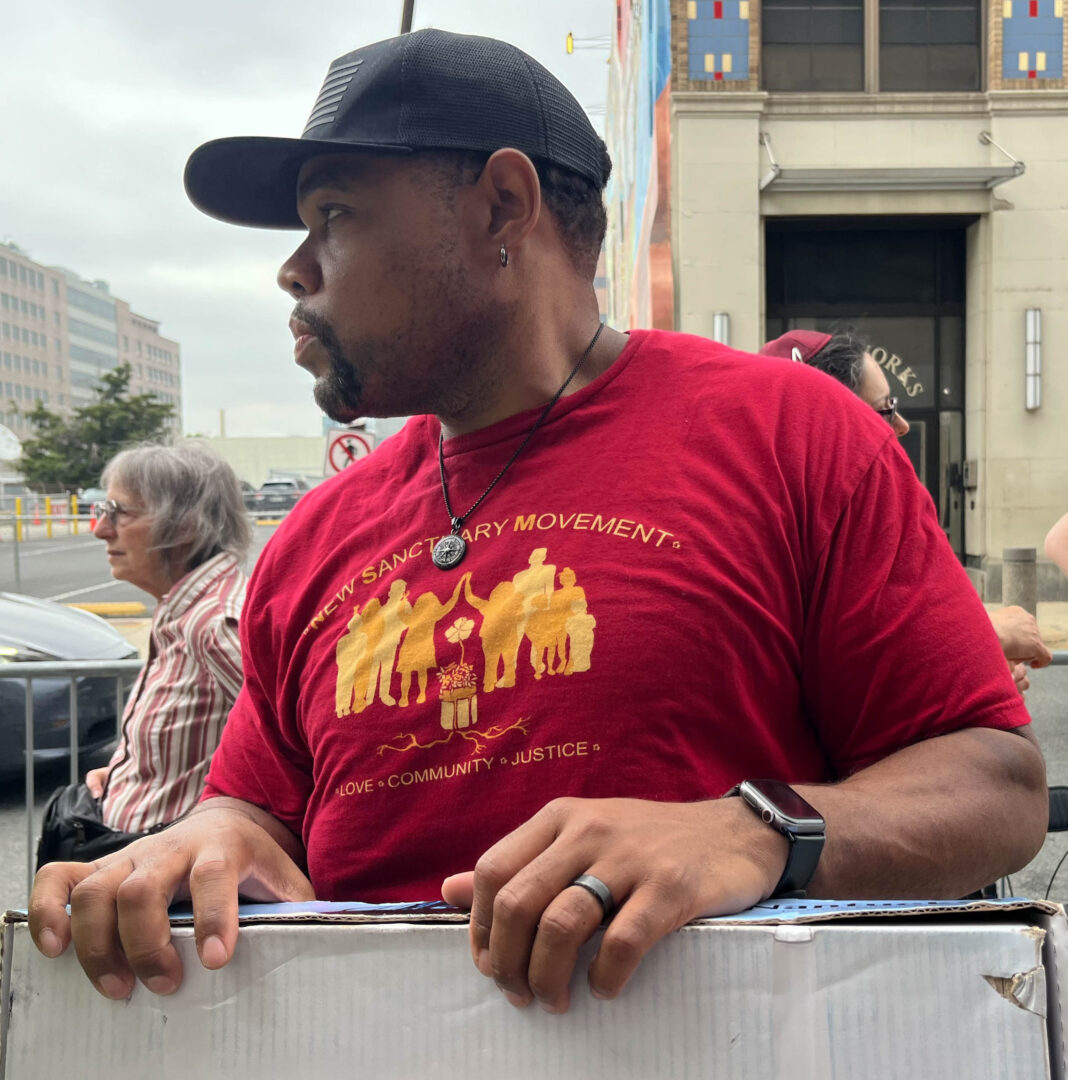
Rev. Neilson and Pastor Tre Ford, a Christian clergyman who works for NSM, both voiced concern about evangelical and other conservative Christian sects’ impact on attitudes toward immigration. “Right now, there are some churches that are really leaning into some very hateful rhetoric in relationship to immigrants,” Pastor Ford said.
Krueger said that the anti-immigration sentiment on the Christian far right may stem from “a deep, deep fear that more immigration means there are people from other faiths coming to the U.S., and that’s a bad thing.”
In response to this perceived threat, he said, conservatives have pushed for legislation to ban Sharia law as recently as last month, when a House of Representatives subcommittee held a hearing on the “Sharia-Free America” campaign.
Krueger described the phenomenon as “founded in just absolutely irrational fears that Islamic law is going to be imposed on American society and override American law.”
Pastor Ford sees no scriptural basis for these views on immigration. “Jesus is very clear on what loving your neighbor looks like, and most times, your neighbor does not look like you,” he said.
Attendees connect their faiths to immigration
Rev. Neilson reads the Bible as a story of immigration. “Abraham, Isaac, Jacob, Joseph, David, Moses, Elijah, Ruth, Jesus…everybody in the Bible is an immigrant,” he said. “The problem is that we were never, in church, allowed or taught to see them that way.”
It hasn’t been a stretch for the host congregations, which have been a mix of Christian and Jewish thus far, to unite faith and immigration.
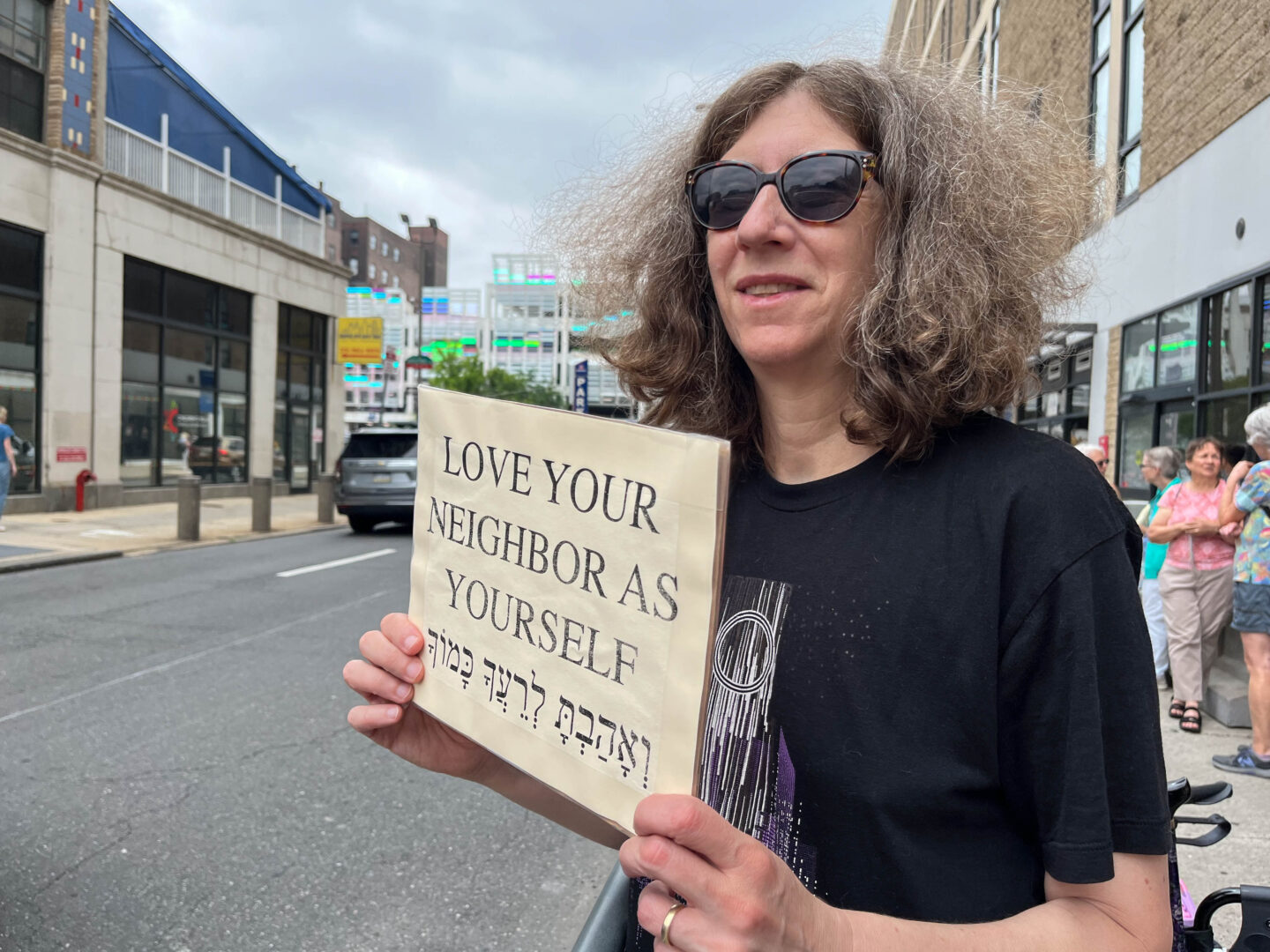
A common refrain across both religions is to love one’s neighbors. Neysa Nevins, a member of the Jewish Renewal congregation P’nai Or, points a sign reading “LOVE YOUR NEIGHBOR AS YOURSELF” toward oncoming traffic when she attends vigils. The quote is printed in both English and Hebrew.
“To love your neighbor as yourself, and to treat the stranger kindly, is sort of a core tenet that repeats itself quite a bit in the Torah, and likely in other texts as well,” Nevins said.
P’nai Or hosted the June 10 vigil. Service leaders invited attendees to read the Mourner’s Kaddish, which Jewish congregations recite to commemorate the deceased.
The P’nai Or Kaddish was revised in recognition of people who have died in ICE custody and shootings since the second Trump administration began. The Kaddish mourned these losses, “with sorrow that we were not yet able to shape a world in which they would have lived.”
A congregation member read the names and birth countries of every person who had died. In response to each name, attendees replied “¡presente!” to invoke the person’s spiritual presence at the ICE office.
The religious commandment to love one’s neighbors and show kindness to strangers extends to Christianity. Pastor Ford also sees immigration in the biblical “Good Samaritan” story, in which a man helps a stranger who has been robbed and left for dead while traveling.
“We’ve got to take into account that Samaria was a region,” he said. “They’re the outsider, okay? Yet Jesus turns and makes them the centerpiece and the highlight of the Good Samaritan story.”
FUCP has applied the values of Unitarian Universalism, a faith that promotes justice and human dignity, to promote immigrant justice through the two NSM vigils that it has hosted.
“These are our people, whether the government thinks they are or not,” said Destiny, an FUCP member and vigil organizer, at the June 3 vigil that their congregation hosted. “And it’s really wholesome, in such a time of political division, to see so many disparate faiths coming together in support of one really strong rallying cry.”
Although there has been little Muslim presence at the vigils, a recent newcomer was Ethan Kang, a Muslim Haverford College student who works for the Council on American Islamic Relations.
“I think it’s really important…especially in this country, where we’re very much a minority, that we connect to people of other faiths,” he said after attending the FUCP vigil on June 3.
Kang sees immigration in the story of the prophet Muhammad and his early followers emigrating from Mecca to flee religious persecution. The story is sometimes called the Hijrah, an Arabic word that refers to migration.
Destiny, Kang, Nevins, and Pastor Ford all cited their faiths as an urgent calling to act against ICE.
“It won’t stop with immigrants, we know this from past authoritarian regimes in different parts of the world,” Nevins said. “If we don’t stop it now, it could just get worse and worse and worse.”
Allyship a strong motivator
Bringing dissent to the city’s ICE headquarters has had consequences for religious protesters unassociated with the NSM vigils. 10 clergy members were arrested for blocking the office’s garage on March 30, and more people were detained later that week for doing the same as part of a Christian Good Friday service in front of the ICE office.
The city’s ICE Out legislation, which passed in April, prevents local police from collaborating with ICE. However, involvement with law enforcement may still heighten the risk of ICE detention, and since the vigils take place so close to the ICE office, attending can be a risk for immigrants.
“The immigrant congregations are those that are typically affected. So those are largely Hispanic, Afro-Caribbean congregations for us right now,” Pastor Ford explained. “You haven’t really seen a lot of those congregations come out for safety, on some level.”
As a result, he said, many vigil attendees come from “allied congregations,” which are predominantly white. Most attendees are also of retirement age, since the vigils are scheduled to occur during ICE’s working hours. The vigils and all who join them bear public witness to the roughly 60,000 people in ICE detention nationwide.
Vigil attendees honor their neighbors who cannot attend by publicly reading messages from them. At the June 3 vigil, an attendee read a letter by a relative named Angelica, who had emigrated from the Soviet Union decades ago and was detained by ICE over Mother’s Day.
“We are the guilty without crime, separated from our loved ones, from our children,” Angelica wrote. Others in detention told her that they hadn’t seen pregnant people taken into ICE custody before the second Trump administration.
Angelica had been freed from detention by the time her words were read in front of the ICE office, but “the women still there” stay on her mind.
‘The horns being blown…are people saying “amen”‘
At a vigil in June, a car crawled past with a teenager filming from the passenger side as the driver spoke with attendees. Although she declined the invitation to join the vigil, the driver said “God bless you,” as she moved the car.
She is not the only one to participate in vigils from the street. Rev. Neilson has noticed the same cars passing by the vigil every week to offer supportive beeps, and even some buses contribute.
“The horns being blown, to me, are people saying ‘amen,’” he said.
The last vigil is scheduled for Aug. 19, but Pedemonti is optimistic about participants’ involvement in other NSM campaigns after that.
“It’ll be an invitation to continue to deepen their participation and their congregation’s participation,” he said in reference to the upcoming completion of 40 weeks straight of vigils. Meanwhile, as vigil attendees return week after week, they invite the people exiting and entering the ICE office to join them.
During the overcast vigil on June 10, the crowd erupted with applause when a man exited the ICE office, smiling, with papers in hand. Minutes later, one tear rolled down a woman’s cheek as she spoke with a woman in a DHS uniform and two advocacy volunteers in neon yellow vests.
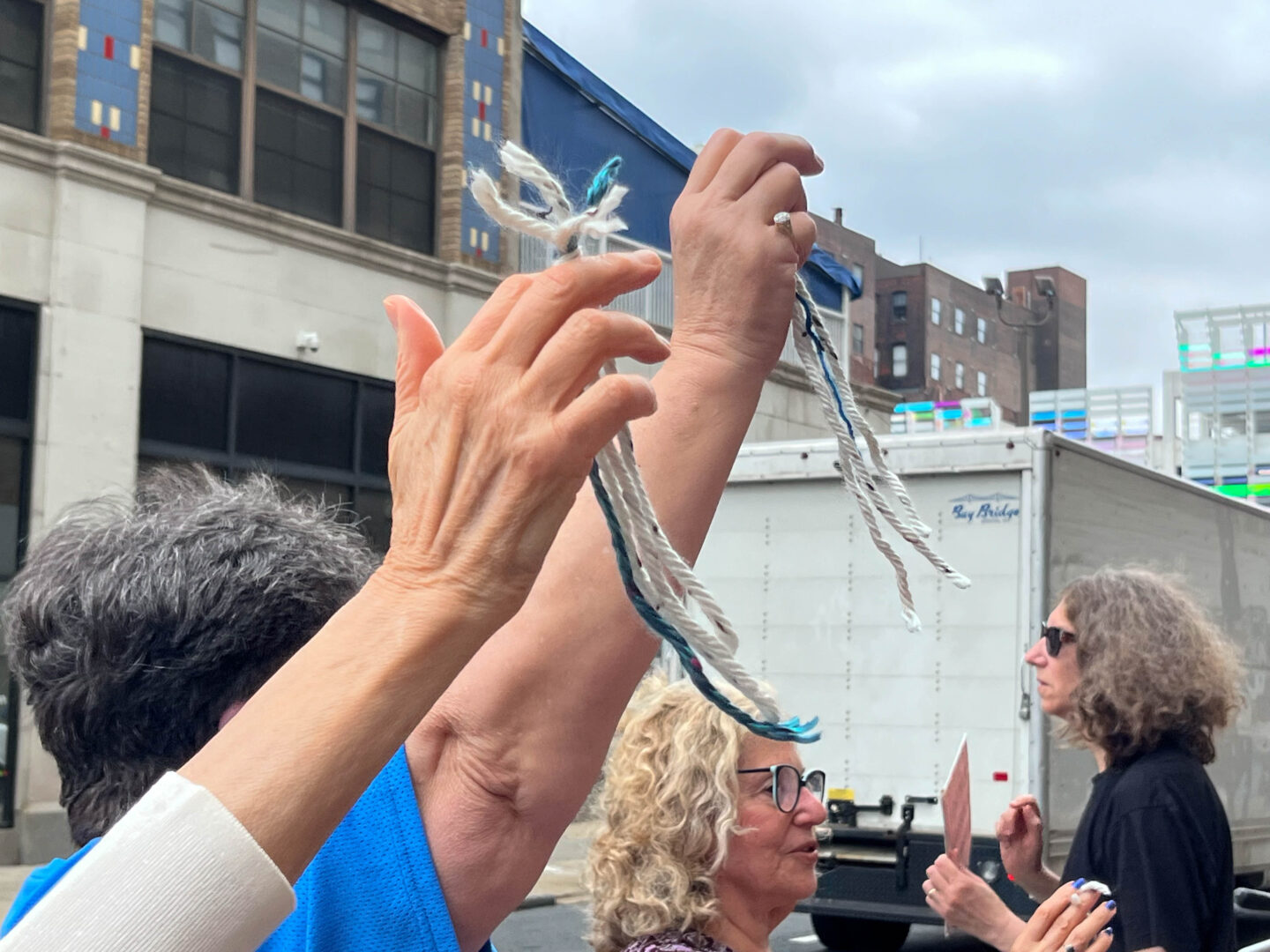
The woman fidgeted with the tzitzit, a tassel traditionally attached to a Jewish prayer shawl, given to her and other vigil participants by P’nai Or. Service leader Tobie Hoffman had explained earlier how “these tzitzit remind us that there are many people on the fringes who need connection.”
Be the first to comment